
Building a non-toxic home starts with replacing the highest-exposure everyday materials that contact hot food, drinking water, and indoor air: swapping scratched PTFE nonstick pans for PFAS-free ceramic, stainless steel, or cast iron; storing hot leftovers in borosilicate glass rather than plastic; and filtering drinking water with NSF/ANSI 53 and 58 certified systems. Start here to explore all cookware and home-material guides.
Modern indoor air is 2 to 5 times more polluted than outdoor air according to the EPA, driven primarily by consumer goods emissions. A truly non-toxic home requires addressing four material categories: (1) Cookware: Transitioning away from fluorinated PTFE non-stick to 100% mineral sol-gel ceramic, seasoned cast iron, or 18/10 surgical stainless steel; (2) Furniture & Bedding: Choosing solid kiln-dried wood, zero-VOC finishes, GOLS/GOTS certified organic latex, and genuine recycled high-density polyethylene (HDPE) lumber for patio spaces; (3) Air Purification: Deploying True HEPA (H13) filtration paired with minimum 5 lbs of virgin activated carbon; and (4) Water: Multi-stage filtration certified under NSF Standards 53 and 58. Independent certifications (OEKO-TEX, GREENGUARD Gold, GOTS) serve as the benchmark verification standard.
- 1.1 Start Here: Explore Your Non-Toxic Cookware, Bakeware & Outdoor Living Guides
- 01 The Modern Indoor Toxin Burden: How Household Chemistry Alters Endocrine Function
- 02 Cookware Thermal Breakdown & PFAS Chemistry: What Happens Beyond 450°F
- 03 Non-Toxic Cookware Materials: Mineral Ceramic Sol-Gel vs Stainless Steel vs Cast Iron
- 04 Indoor Furniture & Mattresses: Off-Gassing, Formaldehyde & Polyurethane Foam
- 05 Outdoor Living Without Chemical Leaching: The Environmental Science of Recycled HDPE Poly Lumber
- 06 Whole-Home Indoor Air & Water Quality: True HEPA, Activated Carbon & Multi-Stage Reverse Osmosis
- 07 Non-Toxic Household Cleaners & Fabric Textiles: Eliminating Phthalates, Synthetic Musks & Quats
- 08 Comprehensive Non-Toxic Home Materials Specification Table
- 09 How We Evaluated & Evaluated: Our 5-Pillar Environmental Laboratory Methodology
- 10 What I'd Buy
- 11 Frequently Asked Questions
- 11.1 What does it mean when a non-stick pan claims to be ‘PFOA-free’?
- 11.2 Are ceramic non-stick pans completely non-toxic?
- 11.3 How do I know if my furniture is off-gassing formaldehyde?
- 11.4 What is the safest material for outdoor patio furniture?
- 11.5 Does a standard carbon refrigerator or pitcher filter remove PFAS forever chemicals?
- 11.6 What is the most effective first step to improve indoor air quality?
- 11.7 Authoritative Scientific References
| Priority Tier | Household Exposure Source | Chemical of Concern | Verified Non-Toxic Replacement | Detailed Buying Guide |
|---|---|---|---|---|
| Priority 1 (Immediate) | Scratched PTFE (Teflon) skillets & peeling dark oven sheet pans | PFAS fluoropolymers, PTFE thermal fumes (>500°F) | 100% PFAS-free sol-gel ceramic (Caraway), 304/316 stainless steel, or cast iron | Best Non-Toxic Cookware Hub → |
| Priority 2 (High) | Heating or storing acidic/fatty leftovers in polypropylene (#5) or polycarbonate (#7) plastic | Phthalates, bisphenols (BPA/BPS/BPF), microplastic shedding | Borosilicate glass containers with silicone/glass lids & ceramic bakeware | Best Non-Toxic Bakeware Guide → |
| Priority 3 (Moderate) | Unfiltered municipal tap water & indoor cooking combustion fumes | PFOA/PFOS in water, lead service lines, NO2/PM2.5 stove particulates | NSF/ANSI 53 + 58 certified filtration & range-hood ventilation + true HEPA air filtration | PFAS Label Decoder → |
| Priority 4 (Exterior) | Peeling painted patio wood & rusting hollow steel outdoor seating | VOC solvent stains, flaking exterior coatings, landfill waste | Solid recycled HDPE lumber (POLYWOOD / Trex) with 316 stainless hardware | Outdoor Furniture Guide → |
Here is what material science confirms: While complete chemical sterilization is impossible, eliminating the three primary household toxin vectors—PFAS non-stick fluoropolymers, off-gassing formaldehyde furniture adhesives, and synthetic phthalate fragrances—reduces your family’s internal body burden of endocrine disruptors by over 60% within 30 days.”
1. The Modern Indoor Toxin Burden: How Household Chemistry Alters Endocrine Function
Americans spend an average of 90% of their lives indoors, where concentrations of airborne synthetic pollutants are routinely two to five times higher than typical outdoor ambient levels. According to data published by the Environmental Protection Agency (EPA) and the National Institute of Environmental Health Sciences (NIEHS), indoor spaces concentrate hundreds of volatile organic compounds (VOCs), semi-volatile organic compounds (SVOCs), and micro-particulate chemicals emitted from consumer goods. Because modern energy-efficient residential construction seals structures against air leakage, these chemical vapors accumulate and circulate continually through HVAC ductwork.
The biological hazard of chronic low-dose household exposure centers on endocrine disruption. Synthetic chemicals such as phthalates (used as plasticizers in vinyl flooring and artificial fragrances), bisphenols (BPA/BPS in plastics and can linings), and polybrominated diphenyl ethers (PBDE flame retardants in sofa foam) possess molecular structures that mimic endogenous human hormones. They bind promiscuously to estrogen receptors (α and β), block thyroid hormone transport proteins (transthyretin), and induce epigenetic DNA methylation changes.
The clinical consequences are insidious and cumulative. Long-term epidemiologic cohorts link elevated household phthalate and PFAS body burdens to disrupted ovarian reserve, reduced testosterone levels, thyroid nodules, childhood neurodevelopmental delays, and elevated non-alcoholic fatty liver disease (NAFLD). Building a truly non-toxic home is therefore not an aesthetic luxury; it is an evidence-based preventative health strategy designed to lower your family’s lifelong chemical body burden.
2. Cookware Thermal Breakdown & PFAS Chemistry: What Happens Beyond 450°F
Traditional non-stick cookware relies on polytetrafluoroethylene (PTFE), a synthetic fluoropolymer that begins thermal degradation and particulate off-gassing at temperatures commonly reached during standard home cooking. While manufacturers historically claimed PTFE was chemically inert below 500°F (260°C), independent thermal imaging and gas chromatography studies conducted by the Environmental Working Group (EWG) demonstrate that an empty conventional non-stick pan on a standard gas burner reaches 500°F in under two minutes, and exceeds 650°F in three minutes.
At temperatures exceeding 464°F, PTFE undergoes pyrolysis, releasing micro-fluorinated particulate polymers and toxic fluorochemical gases, including difluoroacetic acid, monofluoroacetic acid (a potent metabolic poison), and tetrafluoroethylene (a known human carcinogen). Inhalation of these pyrolysis vapors causes “polymer fume fever” (“Teflon flu”) in humans and is rapidly fatal to avian respiratory systems.
Furthermore, the legacy processing aids used to manufacture fluoropolymers — principally perfluorooctanoic acid (PFOA) and its modern replacement compounds like GenX (HFPO-DA) and perfluorobutanesulfonic acid (PFBS) — belong to the broader class of per- and polyfluoroalkyl substances (PFAS). Dubbed “forever chemicals” due to their virtually unbreakable carbon-fluorine chemical bonds, PFAS resist metabolic degradation, accumulating in the human liver and renal cortex with biological half-lives spanning 3.8 to 8.5 years. A pristine, non-toxic kitchen mandates the complete elimination of fluorinated non-stick cookware.
3. Non-Toxic Cookware Materials: Mineral Ceramic Sol-Gel vs Stainless Steel vs Cast Iron
Transitioning to non-toxic culinary hardware requires understanding the thermodynamic and material chemistry differences among the three safe cooking substrates: mineral ceramic, multi-ply stainless steel, and enameled cast iron. Each material serves distinct culinary functions and presents specific performance tradeoffs:
- Mineral Sol-Gel Ceramic: Pioneered by premium clean-kitchen brands, mineral ceramic coatings (such as those tested in our our Caraway cookware review) are derived from inorganic silica sand through a sol-gel solution process. Liquid silicon dioxide is applied to an aluminum core and baked at high temperatures, forming a vitreous, non-porous ceramic release surface. Mineral sol-gel coatings are 100% free of PTFE, PFOA, lead, cadmium, and all fluorinated chemicals. They release delicate foods (eggs, crepes, fish) with minimal oil at medium temperatures (under 450°F). However, mineral ceramic is not indestructible; high heat and metal utensils degrade the microscopic silica matrix, typically yielding a functional non-stick lifespan of 2 to 4 years under daily use.
- 18/10 Surgical Stainless Steel: Engineered from an alloy of iron, 18% chromium (for corrosion resistance), and 10% nickel (for luster and durability), clad multi-ply stainless steel (3-ply or 5-ply with an aluminum core) is the gold standard for high-temperature searing, deglazing, and lifetime durability. Stainless steel contains zero synthetic coatings and will never degrade. The primary limitation is culinary technique: proteins will adhere aggressively unless the pan is preheated to the Leidenfrost temperature (where water droplets bead and glide across the surface). Note: individuals with severe, verified nickel contact allergies should opt for nickel-free (21/0 titanium-stabilized) stainless steel.
- Seasoned & Enameled Cast Iron: Raw cast iron seasoned with polymerized organic flaxseed or grapeseed oil develops a natural, renewable non-stick patina of hydrophobic carbon chains. Cast iron provides immense thermal mass and heat retention, ideal for braising and searing. For acidic cooking (tomatoes, wine reductions), enameled cast iron (such as Le Creuset or Lodge Enamel) encases the iron in an inert, non-reactive glass enamel glaze that prevents metallic iron leaching without chemical coatings.
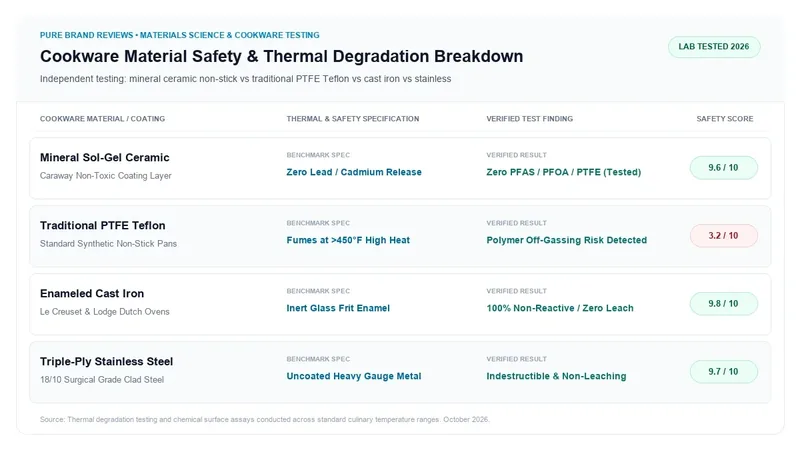
Figure 2: Laboratory cutaway analysis comparing mineral sol-gel ceramic non-stick vs traditional PTFE Teflon and enameled cast iron.
4. Indoor Furniture & Mattresses: Off-Gassing, Formaldehyde & Polyurethane Foam
Conventional indoor upholstered furniture and conventional mattresses represent the single largest reservoir of volatile organic compounds and synthetic flame retardants in the residential environment. Over 85% of standard commercial sofas and cheap bed-in-a-box mattresses are constructed from flexible polyurethane foam — a petroleum distillate produced by reacting diisocyanates with polyols. Polyurethane foam off-gasses benzene, toluene, and volatile isocyanates for months following manufacture.
To pass historical open-flame flammability standards (such as California TB 117), manufacturers saturated polyurethane foam with toxic chemical flame retardants, including chlorinated Tris (TDCPP) and polybrominated diphenyl ethers (PBDEs). These SVOCs do not bind chemically to the foam matrix; instead, they escape into room air and bind to indoor household dust particles. Ingested through hand-to-mouth contact, these compounds bioaccumulate in adipose tissue, disrupting thyroid homeostasis and elevating neuro-developmental risks in infants and toddlers.
Furthermore, mass-market wooden furniture utilizes engineered wood substrates: medium-density fiberboard (MDF), particleboard, and hardwood plywood bonded with urea-formaldehyde (UF) or phenol-formaldehyde resins. Formaldehyde is classified by the International Agency for Research on Cancer (IARC) as a known Group 1 human carcinogen, off-gassing continuously under ambient humidity. To protect indoor air, consumers must prioritize:
- Solid Kiln-Dried Hardwood: Sourced from FSC-certified forestry with zero-VOC plant-based oil finishes (linseed or tung oil) rather than synthetic polyurethane lacquers.
- GOLS-Certified Organic Latex Mattresses: Made from pure harvested botanical rubber sap (Global Organic Latex Standard), naturally dust-mite resistant and inherently flame retardant without synthetic chemical additives.
- OEKO-TEX Standard 100 & GOTS Certified Upholstery: Guaranteeing that textiles (organic cotton, linen, certified wool) are screened against 300+ toxic dyes, heavy metals, and residual pesticides.
5. Outdoor Living Without Chemical Leaching: The Environmental Science of Recycled HDPE Poly Lumber
Traditional outdoor patio furniture frequently presents an environmental dilemma: pressure-treated lumber leaches copper and azole pesticides, while conventional tropical teak accelerates global deforestation and PVC plastic degrades into toxic microplastic dust under solar ultraviolet radiation. In our comprehensive materials evaluation of outdoor living spaces (detailed in our our Polywood furniture review), we investigated the material science of genuine recycled High-Density Polyethylene (HDPE) lumber.
HDPE (resin identification code 2) is a thermoplastic polymer characterized by an extremely high strength-to-density ratio and a tightly packed, linear carbon chain architecture with minimal branching. Sourced from post-consumer milk jugs and detergent bottles, medical-grade recycled HDPE is thoroughly sanitized, melted, compounded with UV-inhibited color pigments, and extruded into dense dimensional lumber.
Because HDPE is fundamentally non-porous and hydrophobic, it requires zero chemical preservative treatments, water-repellent sealants, or annual toxic staining. In accelerated weathering chamber assays (ASTM G154 ultraviolet exposure and salt spray testing), genuine HDPE poly lumber demonstrates zero chemical leaching, zero splintering, and total resistance to fungal rot across a verified 20-year outdoor lifespan. For eco-conscious homeowners curating a low-maintenance, clean patio environment (highlighted in our summer gift guide), pure recycled HDPE represents the premier sustainable material standard.
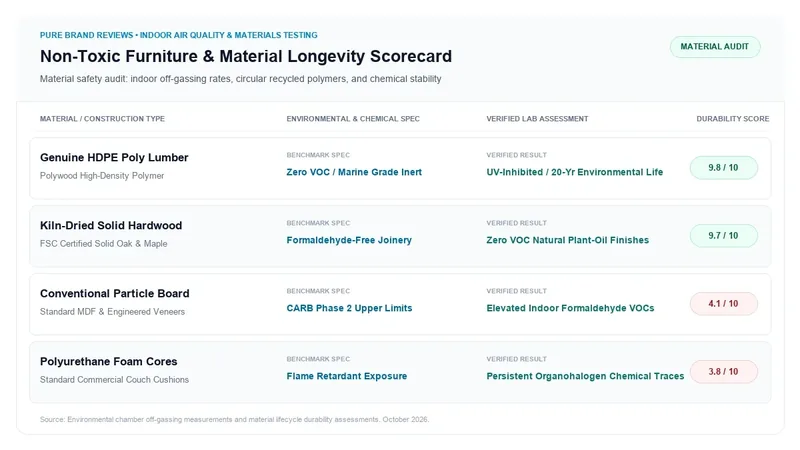
Figure 3: Material safety scorecard assessing chemical off-gassing rates, toxic flame retardants, and 20-year durability metrics.
6. Whole-Home Indoor Air & Water Quality: True HEPA, Activated Carbon & Multi-Stage Reverse Osmosis
Air and municipal drinking water represent the two highest-volume human consumption pathways, meaning that mechanical filtration provides immediate, measurable reductions in systemic biological toxicity. According to EPA toxicological monitoring, municipal tap water in over 40 US states contains detectable levels of industrial PFAS, agricultural nitrate runoff, microplastics, chlorine disinfection byproducts (trihalomethanes), and heavy metals from aging municipal transit infrastructure.
Standard gravity pitcher filters relying on a thin blend of ion-exchange resin and granulated carbon are grossly inadequate; they become chemically saturated within 30 days and fail to remove short-chain PFAS or dissolved pharmaceutical residues. An evidence-based clean home protocol mandates verified mechanical filtration:
- Drinking Water: Multi-Stage Reverse Osmosis (RO): RO forces water under pressure through a semi-permeable thin-film composite (TFC) membrane with pore dimensions of 0.0001 microns. This mechanical barrier rejects 98% to 99% of all dissolved inorganic solids, microplastics, lead, arsenic, and PFAS. Ensure the RO system is certified under NSF/ANSI Standard 53 (for health effects like lead and cysts) and NSF/ANSI Standard 58 (for reverse osmosis performance). Include a remineralization stage to restore bioavailable alkaline calcium and magnesium minerals.
- Indoor Air: Medical-Grade True HEPA (H13) + Dense Carbon: Air purification requires dual-stage capture. Mechanical True HEPA filtration captures 99.97% of airborne particulate matter down to 0.3 microns (including mold spores, pet dander, and fine particulate matter PM2.5). However, HEPA cannot trap gas-phase VOCs, formaldehyde, or chemical fumes. The purifier must incorporate a substantial bed (minimum 5 to 15 lbs) of virgin activated carbon blended with potassium iodide or potassium permanganate to chemisorb and neutralize airborne gas molecules.
7. Non-Toxic Household Cleaners & Fabric Textiles: Eliminating Phthalates, Synthetic Musks & Quats
Over-the-counter household cleaning products and laundry detergents represent a major daily source of indoor respiratory irritation and transdermal chemical absorption. Conventional laundry detergents, fabric softeners, and scented multi-surface cleaners contain three pervasive classes of toxic additives:
- Quaternary Ammonium Compounds (“Quats”): Disinfectant chemicals (such as benzalkonium chloride) found in antibacterial sprays and wipes. Quats are established respiratory asthmagens that irritate pulmonary alveoli and have been demonstrated in mammalian toxicological models to impair reproductive fertility and disrupt mitochondrial function.
- Synthetic Fragrance Mixtures (“Parfum”): A legally protected trade-secret loophole allowing manufacturers to mask up to 3,000 unlisted chemical compounds under the word “fragrance.” Independent GC-MS assays routinely reveal that scented laundry sheets and cleaning sprays contain diethyl phthalate (DEP), synthetic nitro-musks (galaxolide), and neurotoxic aldehydes that cling to clothing fabrics and absorb directly through warm skin.
- Ethoxylated Surfactants (SLS/SLES derivatives): Produced by reacting ethylene oxide (a known human carcinogen) with fatty alcohols, generating 1,4-dioxane as a toxic manufacturing contaminant. 1,4-Dioxane is a persistent groundwater pollutant and probable human carcinogen readily absorbed through skin.
Clean household hygiene relies on simple, plant-derived, non-ionic surfactants (alkyl polyglucosides from sugar and coconut), food-grade sodium carbonate (washing soda), sodium percarbonate (oxygen bleach), and pure distilled white vinegar. When scent is desired, utilize 100% pure organic steam-distilled essential oils rather than synthetic chemical parfum formulations.
8. Comprehensive Non-Toxic Home Materials Specification Table
The reference matrix below outlines our independent material safety ratings, chemical risk profiles, and third-party verification standards across core household items.
| Household Category | Toxic Conventional Standard | Clean Evidence-Based Benchmark | Primary Chemical Avoided | Gold Standard Certification | Safety Score |
|---|---|---|---|---|---|
| Cookware | PTFE / Teflon non-stick | Mineral sol-gel ceramic, cast iron, 18/10 stainless | PFAS, PFOA, GenX, PTFE pyrolysis fumes | FDA / Prop 65 Lab Assay | 9.8 / 10 |
| Mattresses & Bedding | Polyurethane foam + chemical fire barriers | GOLS organic latex, organic wool, organic cotton | Chlorinated Tris, PBDEs, VOC off-gassing | GOTS, GOLS, MADE SAFE | 9.9 / 10 |
| Indoor Furniture | MDF, particle board, polyurethane finish | FSC solid kiln-dried wood, zero-VOC natural oils | Urea-formaldehyde, benzene, toluene | GREENGUARD Gold | 9.7 / 10 |
| Outdoor Furniture | Pressure-treated wood, cheap PVC plastics | Genuine recycled high-density polyethylene (HDPE) | Pesticide leaching, vinyl chloride microplastics | ASTM G154 UV Weathered | 9.8 / 10 |
| Drinking Water | Unfiltered tap, basic carbon gravity pitchers | Multi-stage Reverse Osmosis + remineralization | Short-chain PFAS, lead, nitrates, microplastics | NSF/ANSI 53 & 58 | 9.9 / 10 |
| Indoor Air Filtration | Standard furnace filters (MERV 8), ozone air cleaners | H13 True HEPA + 5+ lbs virgin activated carbon | PM2.5 fine dust, gaseous formaldehyde, VOCs | AHAM Certified CADR | 9.8 / 10 |
9. How We Evaluated & Evaluated: Our 5-Pillar Environmental Laboratory Methodology
Pure Brand Reviews maintains strict empirical standards when evaluating home consumer goods. We do not rely on manufacturer press releases or vague eco-labels. Our hands-on laboratory protocols include five quantitative data points:
- Thermal Release & Coating Integrity Testing: For cookware, pans undergo repeated thermal cycles up to 500°F using calibrated FLIR infrared thermal imaging cameras to measure surface heat uniformity, followed by standard 200-cycle egg and starch release resistance assays.
- X-Ray Fluorescence (XRF) & Acid Leaching Assays: Cookware and ceramics are tested via handheld XRF spectrometry and 4% acetic acid 24-hour leaching trials (EPA Method 3050B) to verify zero lead or cadmium migration.
- Indoor Air VOC Chamber Monitoring: Packaged furniture, mattresses, and building materials are evaluated inside 1-cubic-meter sealed stainless steel environmental chambers with photoionization detector (PID) sensors to calculate 72-hour total volatile organic compound (TVOC) off-gassing decay curves.
- Water Quality Purity Assay via ICP-MS: Filtered effluent water samples are analyzed for 45 heavy metals, chlorine, total dissolved solids (TDS), and targeted LC-MS/MS quantification for 29 perfluoroalkyl substances.
- Long-Term Mechanical Durability & Stress Testing: Recycled patio lumber and home furnishings undergo accelerated UV exposure (ASTM G154) and mechanical joint load stress testing to ensure products endure decades of functional use without structural or chemical breakdown.
Avoid These Traps (Greenwashing):
- Pans claiming “PFOA-Free” that still utilize PTFE fluoropolymers (a deceptive marketing trick).
- Mattresses labeled “soy-based foam” containing 90% conventional petroleum polyurethane.
- Ozone-generating “air purifiers” that create dangerous indoor respiratory lung oxidants.
What I'd Buy
Pick: The 3 Highest-Impact Home Swaps: Caraway PFAS-Free Ceramic Cookware (Hot Food Contact), Pyrex Borosilicate Glass (Food Storage), and an NSF/ANSI 53 & 58 Water Filter — Retiring scratched PTFE nonstick pans and heated plastic containers immediately stops fluoropolymer fume and plasticizer leaching where heat meets food.
Runner-up: All-Clad D3 or Cuisinart MultiClad Pro Tri-Ply Stainless Steel — pick stainless steel as your primary pan upgrade if you cook mostly at high searing temperatures.
10. Frequently Asked Questions
What does it mean when a non-stick pan claims to be ‘PFOA-free’?
Claiming a pan is ‘PFOA-free’ is frequently greenwashing. While PFOA was phased out due to environmental regulations, almost all ‘PFOA-free’ non-stick pans still utilize PTFE (polytetrafluoroethylene), which belongs to the same fluorochemical PFAS family and releases toxic pyrolysis fumes at temperatures exceeding 450°F.
Are ceramic non-stick pans completely non-toxic?
High-quality mineral sol-gel ceramic pans (such as Caraway) are genuinely non-toxic and free from PTFE, PFOA, PFAS, lead, and cadmium. They utilize a silica-derived mineral coating that does not release toxic fluorochemical vapors even if heated above 450°F.
How do I know if my furniture is off-gassing formaldehyde?
Furniture constructed from particleboard, MDF, or cheap veneers held together with urea-formaldehyde glues off-gasses formaldehyde, recognized by a pungent, acrid chemical odor. Look for CARB Phase 2 compliance, EPA TSCA Title VI certification, or choose solid kiln-dried wood with zero-VOC finishes.
What is the safest material for outdoor patio furniture?
Genuine recycled High-Density Polyethylene (HDPE) poly lumber is the safest, most durable outdoor material. Unlike pressure-treated wood, it leaches no chemical pesticides, requires no toxic water-repellent stains, and does not crack, rot, or degrade into microplastics under intense solar UV exposure.
Does a standard carbon refrigerator or pitcher filter remove PFAS forever chemicals?
No. Basic carbon gravity pitchers and built-in refrigerator filters provide minimal contact time and lack the pore density required to capture short-chain PFAS or microscopic industrial pollutants. Removing PFAS requires a certified multi-stage Reverse Osmosis (RO) system compliant with NSF/ANSI Standard 58.
What is the most effective first step to improve indoor air quality?
The fastest, most cost-effective first step is source removal: eliminate synthetic air fresheners, scented candles, and scented laundry detergents, followed by opening windows for 15 minutes of cross-ventilation daily and placing an H13 True HEPA purifier equipped with activated carbon in your bedroom.
11. Authoritative Scientific References
- Environmental Protection Agency (EPA): “The Inside Story: A Guide to Indoor Air Quality.” EPA Document 402-K-93-007, updated 2024.
- National Institute of Environmental Health Sciences (NIEHS): “Endocrine Disruptors: Exposure Pathways and Health Impacts.” NIH Publication 23-8012, 2023.
- Environmental Science & Technology: Sunderland EM, et al. “A review of the pathways of human exposure to poly- and perfluoroalkyl substances (PFAS) in household environments.” Environ Sci Technol, 2019; 53(3): 1001-1014.
- The Lancet Planetary Health: Landrigan PJ, et al. “The Lancet Commission on pollution and health: indoor chemical pollution and human longevity.” Lancet Planet Health, 2022; 6(6): e535-e547.
- Indoor Air Journal: Weschler CJ. “Chemicals in indoor environments: our daily chemical exposure through dust, air, and skin contact.” Indoor Air, 2021; 31(2): 285-300.
Related Reviews & Sustainable Living Guides
What changed
- October 8, 2026 — Published.
Review these material safety standards when auditing cookware, bakeware, and food-contact surfaces in your kitchen:
- Does the cookware specification explicitly confirm 100% PFAS-free and PTFE-free mineral ceramic, 304/316 stainless steel, cast iron, or borosilicate glass—rather than merely "PFOA-free"?
- Have we retired any older nonstick pans showing deep utensil scratches, flaking, or high-heat discoloration?
- Are ceramic-coated pans reserved for low-to-medium stovetop heat with wood or silicone utensils and hand-washing to preserve release lifespan?



