Creatine is a natural compound your liver and kidneys synthesize and store primarily in skeletal muscle as phosphocreatine to recycle adenosine triphosphate (ATP) during brief, heavy efforts (Kreider et al., 2017). Taking 3 to 5 grams of plain creatine monohydrate daily saturates muscle stores in three to four weeks without requiring a loading phase, supporting resistance-training strength and lean mass.
Not medical advice — ask your clinician: This article is for informational and educational purposes only and is not medical advice. Consult your physician or pharmacist before starting creatine, especially if you have pre-existing kidney disease, are pregnant or breastfeeding, are under 18, or take medications affecting renal function or fluid balance:
- Given my kidney health history and current medication list, is a 3 to 5 gram daily dose of plain creatine monohydrate appropriate for me?
- Should I note my creatine supplementation before upcoming metabolic or serum creatinine lab panels so an expected creatinine rise is not misread?
- Which independent third-party verification program (NSF Certified for Sport, USP Verified, or Informed Sport) matches my health or athletic needs?
- 01 What Creatine Is and How It Works
- 02 What the Evidence Supports — and What It Does Not
- 2.1 Supported by Strong Clinical Evidence
- 2.2 Mixed or Modest
- 2.3 Not Established
- 03 Creatine Dosage: How Much to Take
- 04 Do You Need a Loading Phase?
- 05 Is Creatine Safe? Side Effects and Who Should Avoid It
- 06 How to Choose a Creatine: What Matters on the Label
- 07 Creatine Worth Buying
- 08 Creatine for Women Over 40
- 09 60-Second Label Audit (Expanded)
- 10 Creatine Questions, Answered (FAQ)
- 10.1 Do I need to load creatine?
- 10.2 Will creatine make me gain weight or look bulky?
- 10.3 Is creatine bad for your kidneys?
- 10.4 Does creatine cause hair loss?
- 10.5 How long until creatine works?
- 10.6 Can women take creatine?
- 10.7 Do I need to cycle off creatine?
- 10.8 What is the best time to take creatine?
- 11 Keep Reading: The Creatine Cluster
- What it is: Creatine is a natural nitrogenous compound stored primarily in skeletal muscle (~95%) as phosphocreatine to recycle adenosine triphosphate (ATP) during brief, high-intensity efforts (Kreider et al., 2017).
- Standard daily dose: Take 3 to 5 grams of plain creatine monohydrate once daily with a meal or water; consistency matters more than workout timing (Kreider et al., 2017).
- Loading is optional: A 20 g/day loading week reaches full muscle saturation in 5 to 7 days, whereas 3 to 5 g/day reaches the same saturation endpoint in 3 to 4 weeks (Hultman et al., 1996).
- Safety boundary: Controlled human trials in healthy adults report no adverse kidney effects (Kreider et al., 2017), though anyone with kidney disease, pregnant or breastfeeding women, teens under 18, or people taking nephrotoxic drugs must consult a clinician first.
- Buying rule: Choose unflavored, single-ingredient creatine monohydrate carrying an independently verifiable seal (NSF Certified for Sport, USP Verified, or Informed Sport) and compare tubs by cost per 5 g serving.
What Creatine Is and How It Works
Creatine is a natural non-protein amino acid compound synthesized in the liver, kidneys, and pancreas from arginine, glycine, and methionine (Kreider et al., 2017). Omnivorous adults produce 1 to 2 g/day endogenously and get another 1 to 2 g/day from meat and fish (Kreider et al., 2017). Because plants contain almost no creatine, vegetarians and vegans hold lower baseline muscle stores and often show larger relative gains from supplementation (Burke et al., 2003; Kreider et al., 2017).
Roughly 95% of your total creatine pool resides in skeletal muscle, with 5% in high-energy tissues like the brain, heart, and retina (Kreider et al., 2017). Inside muscle cells, two-thirds binds phosphate as phosphocreatine (PCr). During maximal efforts lasting 1 to 10 seconds—such as heavy lifting sets or short sprints—muscles strip a phosphate from adenosine triphosphate (ATP), leaving adenosine diphosphate (ADP). Phosphocreatine immediately donates its phosphate via creatine kinase to regenerate ATP.
Think of muscle creatine storage as a rechargeable battery with a fixed ceiling. Supplementation raises intramuscular phosphocreatine by 10% to 40% depending on baseline stores (Harris et al., 1992; Kreider et al., 2017). Once stores reach 100% capacity—full muscle saturation—cells recycle ATP faster between hard repetitions. If you are new to supplementation and want a first-month plan, start with our creatine for beginners onboarding guide.
%3C/text%3E%3Ctext x='380' y='122' text-anchor='middle' font-family='sans-serif' font-size='12' fill='%23065f46'%3Eto Depleted ADP%3C/text%3E%3Cpath d='M490 105 L530 105' stroke='%23047857' stroke-width='3'/%3E%3Crect x='536' y='40' width='200' height='130' rx='8' fill='%23ffffff' stroke='%23047857' stroke-width='2'/%3E%3Ctext x='636' y='75' text-anchor='middle' font-family='sans-serif' font-size='14' font-weight='bold' fill='%230f172a'%3E3. Rapid ATP Recycling%3C/text%3E%3Ctext x='636' y='100' text-anchor='middle' font-family='sans-serif' font-size='12' fill='%23475569'%3EFuels Short Heavy Efforts%3C/text%3E%3Ctext x='636' y='122' text-anchor='middle' font-family='sans-serif' font-size='12' fill='%23475569'%3E(1-10 Second Bursts)%3C/text%3E%3C/svg%3E)
What the Evidence Supports — and What It Does Not
Our review organizes human randomized controlled trials (RCTs) into a three-tier evidence ladder naming what was studied, what was measured, who participated, and the primary citation.
1. Supported by Strong Clinical Evidence
- High-intensity power and lean mass across 100 trials: A meta-analysis of 100 human studies by Branch (2003, IJSNEM) measured lean mass and laboratory power tasks, reporting significant gains in lean body mass and repetitive bouts under 30 seconds.
- Lean mass and strength in older adults (aged 57–70): A meta-analysis of 22 RCTs across 721 older men and postmenopausal women by Chilibeck et al. (2017, Open Access J Sports Med) measured DXA lean mass and 1-RM chest and leg press over 7 to 52 weeks of resistance training, finding a 1.37 kg greater lean mass increase and superior strength gains versus placebo.
- Repeated-bout work capacity: The ISSN position stand (Kreider et al., 2017, JISSN) concluded across hundreds of human trials that creatine monohydrate is the most effective nutritional ergogenic aid available for increasing high-intensity exercise capacity and lean mass during training.
2. Mixed or Modest
- Cognitive processing under sleep loss or fatigue: Reviews of human RCTs by Avgerinos et al. (2018, Exp Gerontol; 6 RCTs, 281 adults) and Dolan et al. (2019, Eur J Sport Sci) measured memory and reasoning, finding benefits mainly under sleep deprivation, mental fatigue, or vegetarian diets rather than rested young omnivores.
- Bone mineral density with lifting: A 12-month RCT in 47 postmenopausal women by Chilibeck et al. (2015, MSSE) measured femoral neck BMD during resistance training and found slower bone loss (-1.2% vs -3.9% placebo), whereas a 2-year trial in 237 postmenopausal women (Chilibeck et al., 2023) found no significant areal BMD difference at the hip or spine.
3. Not Established
- Direct fat loss: Creatine has zero calories, is non-thermogenic, and does not burn fat without a calorie deficit (Kreider et al., 2017).
- Testosterone boosting: Controlled trials measuring resting serum testosterone show no meaningful rise from pure creatine monohydrate (Kreider et al., 2017).
- Muscle growth without lifting: Without resistance training, saturating muscle stores adds 1 to 3 lb of intracellular water but does not build contractile muscle protein (Branch, 2003; Kreider et al., 2017).
How the evidence maps to your goal:
- Lifters and field athletes: Saturated stores support 1 to 2 extra reps across multi-set lifts, compounding volume over 8 to 12 weeks (Kreider et al., 2017). See our creatine loading phase guide.
- Women over 40: Postmenopausal trials show strength and lean-mass retention when paired with 2 to 3 weekly lifting sessions (Chilibeck et al., 2017; Smith-Ryan et al., 2021). Read our creatine for women over 40 guide.
- Older adults (60+): Pairing 3 to 5 g/day with supervised resistance training supports sit-to-stand function and lean tissue retention against sarcopenia (Chilibeck et al., 2017).
Creatine Dosage: How Much to Take
| Goal / Reader Profile | Dosing Approach | Saturation Timeline & Expectation |
|---|---|---|
| Standard daily maintenance (most adults) | 5 g/day once daily | Reaches 100% muscle saturation in ~3 to 4 weeks with minimal GI risk (Hultman et al., 1996; Kreider et al., 2017). |
| Smaller body frame or gentle GI ramp | 3 g/day once daily | Achieves the exact same ~20% muscle creatine rise over 28 days as a 6-day load (Hultman et al., 1996). |
| Rapid saturation for an immediate block | 20 g/day (4 × 5 g) for 5–7 days, then 3–5 g/day | Saturates muscle stores in ~5 to 7 days; uses ~75% more powder in month one (Hultman et al., 1996). |
| Vegetarians and vegans | 3 to 5 g/day once daily | Starts from lower baseline stores and reaches the same saturation ceiling in 3 to 4 weeks (Kreider et al., 2017). |
For most adults, the evidence-backed dose is 3 to 5 grams of plain creatine monohydrate once daily (Kreider et al., 2017). In body-weight terms, roughly 0.03 g/kg/day maintains saturated stores—about 3 g/day for smaller adults (110 to 150 lb) and 5 g/day for average-to-larger builds (160 to 220+ lb) (Kreider et al., 2017).
Timing and mixing: Daily consistency matters far more than pre- or post-workout timing. Taking your 3 to 5 g dose with a meal or dissolved in 8 to 12 oz of water supports comfortable digestion and muscle uptake (Kreider et al., 2017). A level household teaspoon holds roughly 5 g of micronized powder; weigh your scoop once on a digital kitchen scale to verify its true gram weight. If you miss a day, resume your normal 3 to 5 g dose the next day without doubling up. Loading is optional — full comparison in our loading vs daily dosing guide.
Do You Need a Loading Phase?
No — a creatine loading phase is optional. In the classic human muscle-biopsy study by Hultman et al. (1996, Journal of Applied Physiology), men taking 20 g/day for 6 days and men taking 3 g/day for 28 days both achieved the exact same ~20% increase in total muscle creatine. Loading simply trades extra powder and four daily doses for reaching full saturation three weeks sooner.
- Reaches full muscle saturation in 5 to 7 days (Hultman et al., 1996).
- Useful if a competition or peaked training cycle starts this week.
- Replicates the rapid saturation schedule of early lab trials (Harris et al., 1992).
- Consumes ~245 g of powder in 28 days versus 140 g on 5 g/day.
- Requires remembering four separate 5 g doses with meals daily.
- Higher osmotic GI upset risk if doses are combined into 10 g boluses (Ostojic & Ahmetovic, 2008).
%3C/text%3E%3Ctext x='30' y='72' font-family='sans-serif' font-size='13' font-weight='bold' fill='%23047857'%3ELoading (20g/d)%3C/text%3E%3Crect x='160' y='54' width='135' height='26' rx='5' fill='%23047857'/%3E%3Ctext x='305' y='72' font-family='sans-serif' font-size='12' fill='%231e293b'%3E~1 Week (Days 5-7) %E2%86%92 100%25 Saturation (Maintained at 3-5g/d)%3C/text%3E%3Ctext x='30' y='122' font-family='sans-serif' font-size='13' font-weight='bold' fill='%230284c7'%3EDaily (3-5g/d)%3C/text%3E%3Crect x='160' y='104' width='540' height='26' rx='5' fill='%230284c7'/%3E%3Ctext x='430' y='122' text-anchor='middle' font-family='sans-serif' font-size='12' font-weight='bold' fill='%23ffffff'%3E~3-4 Weeks (Day 28) %E2%86%92 Same 100%25 Saturation Endpoint%3C/text%3E%3Cline x1='700' y1='42' x2='700' y2='145' stroke='%230f172a' stroke-width='2' stroke-dasharray='4,4'/%3E%3C/svg%3E)
For the full study table, 28-day gram math, and reload rules after a break, read our creatine loading phase guide.
Is Creatine Safe? Side Effects and Who Should Avoid It
1. The clinical safety record in healthy adults: Across three decades of research, the ISSN position stand (Kreider et al., 2017) reviewed human trials lasting up to 5 years of daily intake and found no adverse effects on kidney function, liver enzymes, or injury rates in healthy adults taking 3 to 5 g/day.
2. The serum creatinine blood-test confusion (#1 safety question): Roughly 1% to 2% of muscle creatine converts daily into creatinine, a byproduct filtered by the kidneys and used on blood panels to estimate glomerular filtration rate (eGFR). Supplementing creatine elevates serum creatinine slightly due to higher creatine turnover. In healthy adults, this mild rise reflects normal turnover, not kidney damage (Kreider et al., 2017). Tell your doctor you take creatine before lab work; clinicians can order a Cystatin C test to assess renal filtration independent of creatine intake.
3. Documented side effects (water weight and GI comfort):
- Intracellular water weight (1 to 3 lb): Creatine pulls water inside skeletal muscle cells during saturation, raising scale weight by 1 to 3 lb without adding fat or subcutaneous bloat (Hultman et al., 1996; Kreider et al., 2017).
- Dose-dependent GI discomfort: Large single boluses pull water into the gut. Ostojic and Ahmetovic (2008, Res Sports Med) reported diarrhea in 55.6% of athletes taking a single 10 g dose versus 28.6% taking two 5 g doses. Keep single servings at 3 to 5 g with food and water.
4. The hair-loss and DHT question: The claim that creatine causes hair loss stems from one 3-week crossover study in 20 male rugby players (van der Merwe et al., 2009, Clin J Sport Med) measuring a serum DHT hormone shift during 25 g/day loading. It did not measure hair loss, baseline DHT differed between groups, and no trial has replicated it (Antonio et al., 2021).
This guide is educational information, not personal medical advice. Speak with your physician or pharmacist first if any apply:
- Pre-existing kidney disease or reduced eGFR: Do not self-supplement without nephrologist clearance.
- Pregnancy or breastfeeding: Human RCT data remain limited; consult your OB/GYN first (Smith-Ryan et al., 2021).
- Nephrotoxic or fluid-balance drugs: Check with your pharmacist if taking diuretics, high-dose NSAIDs, or cyclosporine.
- Adolescents under 18: Review supplementation with a pediatrician and parent first (Kreider et al., 2017).
How to Choose a Creatine: What Matters on the Label
Audit any creatine tub in 60 seconds using five label checks:
- Creatine monohydrate only: Nearly all human efficacy and safety trials used plain creatine monohydrate (Kreider et al., 2017). Skip novel forms (HCl, buffered, ethyl ester, or liquid creatine) that lack superior human saturation data.
- No proprietary blends: The Supplement Facts panel must list the exact gram weight of creatine monohydrate per serving (typically 5 g).
- An independently verifiable third-party seal: Look for NSF Certified for Sport, USP Verified, or Informed Sport. Read our supplement seals guide for how to verify a seal in 90 seconds.
- Nothing else in the tub: Pick an unflavored powder where “Other Ingredients” reads “None.”
- Price-per-serving sanity check: Divide the verified tub price by the number of 5 g servings inside:
Cost per 5 g serving = Tub Price ÷ Servings per Container.
%3C/text%3E%3Ctext x='45' y='88' font-family='sans-serif' font-size='12' fill='%23334155'%3EServings Per Container: 90%3C/text%3E%3Cline x1='45' y1='98' x2='325' y2='98' stroke='%230f172a' stroke-width='3'/%3E%3Ctext x='45' y='122' font-family='sans-serif' font-size='13' font-weight='bold' fill='%23047857'%3ECreatine Monohydrate 5 g%3C/text%3E%3Cline x1='45' y1='136' x2='325' y2='136' stroke='%23cbd5e1' stroke-width='1'/%3E%3Ctext x='45' y='160' font-family='sans-serif' font-size='12' fill='%23334155'%3EOther Ingredients: None%3C/text%3E%3Crect x='45' y='176' width='220' height='34' rx='4' fill='%23ecfdf5' stroke='%23047857' stroke-width='1.5'/%3E%3Ctext x='155' y='198' text-anchor='middle' font-family='sans-serif' font-size='12' font-weight='bold' fill='%23065f46'%3ENSF Certified for Sport / USP Seal%3C/text%3E%3Ctext x='375' y='60' font-family='sans-serif' font-size='13' font-weight='bold' fill='%230f172a'%3E1. Full 5 g Serving Size %26 Total Servings Stated%3C/text%3E%3Ctext x='375' y='105' font-family='sans-serif' font-size='13' font-weight='bold' fill='%23047857'%3E2. Single Active: Creatine Monohydrate (No Blend)%3C/text%3E%3Ctext x='375' y='150' font-family='sans-serif' font-size='13' font-weight='bold' fill='%230f172a'%3E3. Other Ingredients: None (Zero Fillers/Sugars)%3C/text%3E%3Ctext x='375' y='195' font-family='sans-serif' font-size='13' font-weight='bold' fill='%23065f46'%3E4. Named Third-Party Seal You Can Verify Online%3C/text%3E%3C/svg%3E)
Creatine Worth Buying
Each pick is verified against its official Supplement Facts panel and certifier registry (prices checked October 16, 2026):
- Thorne Creatine (Unflavored Micronized Creatine Monohydrate): 5 g/scoop, 90 servings (450 g), Other Ingredients: None, NSF Certified for Sport. $44.00 one-time ($0.49/serving) or $39.60 subscription (44.0¢/serving).
- Momentous Creatine (Unflavored Creapure® Creatine Monohydrate): 5 g/scoop, 90 servings (450 g), Other Ingredients: None, dual NSF Certified for Sport and Informed Sport certified. $42.99 one-time ($0.48/serving) or $32.24 Subscribe & Save ($0.36/serving).
- Optimum Nutrition Micronized Creatine Powder (Unflavored): 5 g/rounded tsp, 60 servings (300 g), Other Ingredients: None, Informed Choice certified. $20.49 one-time ($0.34/serving).
Compare the top two athlete-certified tubs in our Momentous vs Thorne creatine comparison, or review all five scored picks in our best creatine monohydrate buying guide.
Creatine for Women Over 40
Women in their 40s, 50s, and beyond increasingly pair creatine monohydrate with resistance training to support strength and lean tissue. While randomized trials in postmenopausal women show significant gains in strength and lean mass when paired with lifting (Chilibeck et al., 2017), clinical honesty matters: no published RCT has enrolled a confirmed-perimenopausal cohort to evaluate creatine for perimenopausal symptoms, so researchers extrapolate from postmenopausal trials and lifespan reviews (Smith-Ryan et al., 2021). At 3 to 5 g/day, cellular hydration stays inside the muscle rather than causing subcutaneous puffiness. Read our creatine for women over 40 guide for the full breakdown.
60-Second Label Audit (Expanded)
- Single-ingredient check: confirm the Supplement Facts panel lists creatine monohydrate as the only active ingredient. Creatine monohydrate is the exact chemical form used in the overwhelming majority of human strength, lean-mass, and cognitive trials. Multi-ingredient "creatine matrix" tubs or alternative salts such as creatine ethyl ester and buffered creatine cost more per serving without showing superior muscle saturation in head-to-head studies.
- Serving math: verify how many grams are in each scoop and how many servings are in the container. A standard daily maintenance dose is 3 to 5 grams of pure creatine monohydrate, and the Supplement Facts panel should state that exact gram weight on its own line alongside the total container servings. If creatine is buried inside a pre-workout proprietary blend where only the total scoop weight is shown, you cannot verify whether you are getting a studied daily dose.
- Third-party seals: look for an NSF Certified for Sport, USP Verified, or Informed Sport mark on the label or official product page. Because dietary supplements are not pre-approved by the FDA before reaching store shelves, an independent certification mark is the most reliable way to confirm label accuracy and contaminant screening. Seals from NSF, USP, or Informed Sport verify that an accredited lab has tested the product for heavy metals, microbiological purity, and banned substances.
- Other ingredients: scan the excipient line for fillers, artificial flavors, or proprietary blends you did not ask for. Pure micronized creatine monohydrate requires nothing under "Other Ingredients" beyond the active powder itself. Skipping artificial dyes, added sugars, and stimulant additives keeps your daily routine clean and lets you mix the powder into water, coffee, or a post-workout shake.
- Price per serving: divide the total container price by the number of 5-gram servings to compare brands like for like. Two tubs with the same sticker price can differ by 50 percent or more in real cost if one holds 60 servings and the other holds 90 or 100. Calculating the price per 5-gram serving before checkout shows you exactly how much you are paying for the certification seal and packaging.
Creatine Questions, Answered (FAQ)
1. Do I need to load creatine?
No — loading is optional. Taking 20 g/day (4 × 5 g) for 5 to 7 days saturates muscle stores in about one week, while 3 to 5 g once daily reaches the exact same 100% saturation in 3 to 4 weeks (Hultman et al., 1996). See our creatine loading phase guide.
2. Will creatine make me gain weight or look bulky?
Expect a 1 to 3 lb scale increase from intracellular water inside muscle fibers during saturation (Hultman et al., 1996; Kreider et al., 2017) — not body fat or puffiness. Building bulky muscle mass requires a sustained calorie surplus and heavy hypertrophy training.
3. Is creatine bad for your kidneys?
Creatine raises serum creatinine, the metabolic marker kidney blood panels measure — an expected benign rise from creatine turnover, not renal damage. Controlled trials in healthy adults show no adverse kidney effects at 3 to 5 g/day (Kreider et al., 2017). Anyone with kidney disease or taking nephrotoxic drugs must consult a clinician first.
4. Does creatine cause hair loss?
One 2009 study in 20 male rugby players (van der Merwe et al., 2009) measured a serum DHT hormone shift during loading, not hair loss, and has never been replicated (Antonio et al., 2021). Evidence treats it as neither a confirmed risk nor a closed case.
5. How long until creatine works?
Muscle stores reach full saturation in ~1 week with loading or 3 to 4 weeks at 3 to 5 g/day (Hultman et al., 1996). Measurable strength gains follow weeks of consistent resistance training on saturated muscle — it is not an acute stimulant.
6. Can women take creatine?
Yes. Trials in adult and postmenopausal women support 3 to 5 g/day of creatine monohydrate paired with resistance training for strength and lean mass (Chilibeck et al., 2017; Smith-Ryan et al., 2021). Read our creatine for women over 40 guide for the evidence ladder and perimenopause honesty note.
7. Do I need to cycle off creatine?
No. Continuous daily intake is standard across long-term clinical trials, and no evidence supports cycling off (Kreider et al., 2017). Missing one day does not reset saturation, as muscle stores wash out gradually over ~30 days (Hultman et al., 1996).
8. What is the best time to take creatine?
Workout timing is minor compared to daily consistency (Kreider et al., 2017). Take 3 to 5 g once daily with a meal and water at whatever time you will remember every day.
Keep Reading: The Creatine Cluster
| Spoke Guide | Owned Angle & Scope | Who It Is Built For |
|---|---|---|
| Creatine for Women Over 40 | 3-rung evidence ladder, perimenopause honesty note, and dose-by-goal table | Women 40+ evaluating strength, bone, and midlife body-composition evidence |
| Creatine Loading Phase Guide | 20 g/day loading vs 3–5 g/day steady dosing, biopsy studies, and 28-day gram math | Lifters deciding whether to load for 1 week or start at a daily maintenance dose |
| Momentous vs Thorne Creatine Comparison | Two-brand head-to-head on NSF Certified for Sport tubs, sourcing, and subscription math | Buyers comparing Momentous Creatine and Thorne Creatine side by side |
| NSF vs USP vs Informed Sport | What each third-party seal verifies, contamination data, and 90-second registry check | Shoppers and anti-doping screened athletes verifying supplement purity seals |
| Best Creatine Monohydrate Buying Guide | 5-criterion scored rubric, 5 verified picks, cost-per-serving table, and 5 label red flags | Comparison shoppers ready to choose a verified creatine monohydrate tub |
| Creatine for Beginners | The only 3 things a beginner must know, a 5-step first-30-days plan, and myth answers | First-time users looking for a simple, jargon-free starting routine |
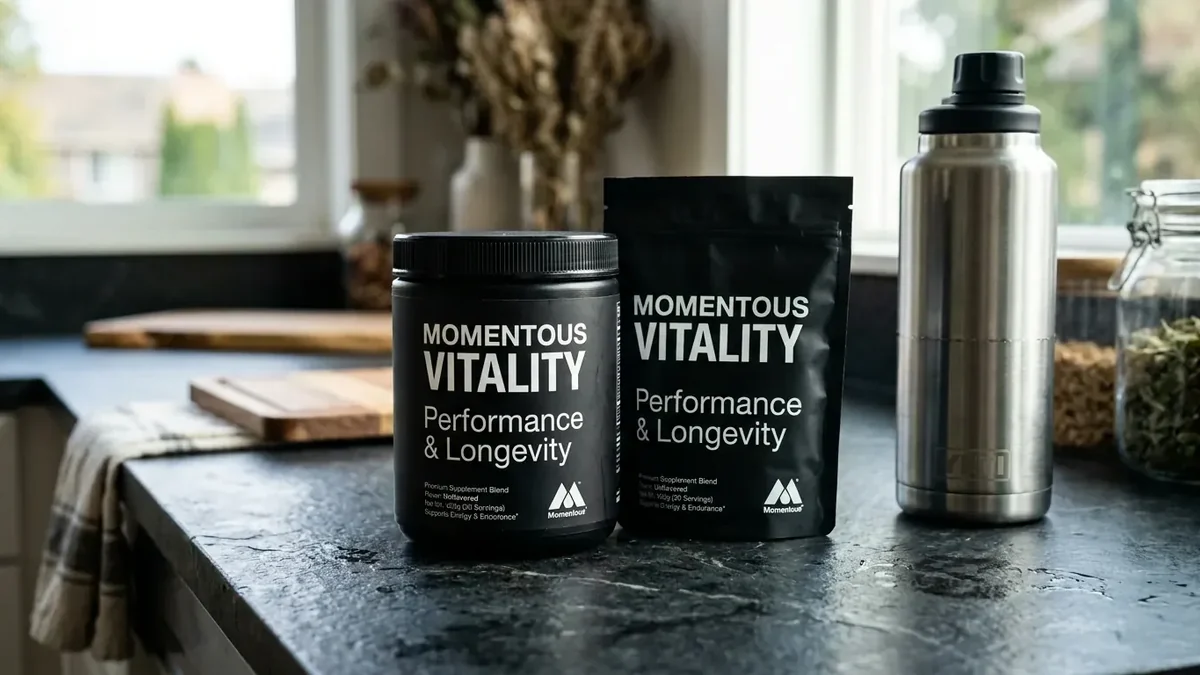
Related reading: Evaluating multi-ingredient men’s performance stacks alongside foundational creatine? See our contextual Momentous Vitality review.