Most over-the-counter thyroid support supplements draw from the same 14 recurring ingredients: trace minerals (iodine, selenium, zinc, copper, manganese, molybdenum), B-vitamins (B12, B6), amino acid precursors (L-tyrosine), and adaptogenic herbs (ashwagandha, schisandra, bladderwrack). This clinical reference breaks down what each ingredient actually does and where human evidence is strong or thin.
- 01 Minerals: The Thyroid's Raw Materials
- 1.1 Iodine (from Kelp)
- 1.2 Zinc
- 1.3 Selenium
- 1.4 Magnesium
- 1.5 Copper
- 1.6 Manganese
- 1.7 Molybdenum
- 02 Botanicals and Aminos: The Supporting Cast
- 2.1 Kelp
- 2.2 Bladderwrack
- 2.3 L-Tyrosine
- 2.4 Vitamin B12
- 2.5 Cayenne Pepper
- 2.6 Ashwagandha
- 2.7 Schisandra
- 03 Why Ingredients Are Not the Same as Product Efficacy
- 04 Take This to Your Appointment: The Expanded Lab & Label Checklist
- 05 Frequently Asked Questions
- 5.1 What are the most important ingredients in a thyroid supplement?
- 5.2 Does ashwagandha help thyroid function?
- 5.3 Is kelp safe for thyroid supplements?
- 5.4 What does selenium do for the thyroid?
- 5.5 Can I take thyroid-support ingredients with levothyroxine?
- 5.6 Do the ingredients in ThyraFemme Balance have evidence behind them?
- 5.7 Are 14 ingredients better than 5 in a thyroid formula?
When a supplement label lists fourteen thyroid-related ingredients by name without publishing individual weights, separating biochemistry from marketing requires examining each substance on its own scientific merits. Below is an evidence-based glossary of all 14 ingredients that appear on the ThyraFemme Balance panel — what each one is, why formulators include it, what peer-reviewed human research has examined, and what remains unknown when capsule doses are undisclosed. To see how ThyraFemme's formula scored in our complete audit, or to learn how to judge any thyroid supplement label, follow our companion guides. This page is for educational purposes only and is not medical advice.
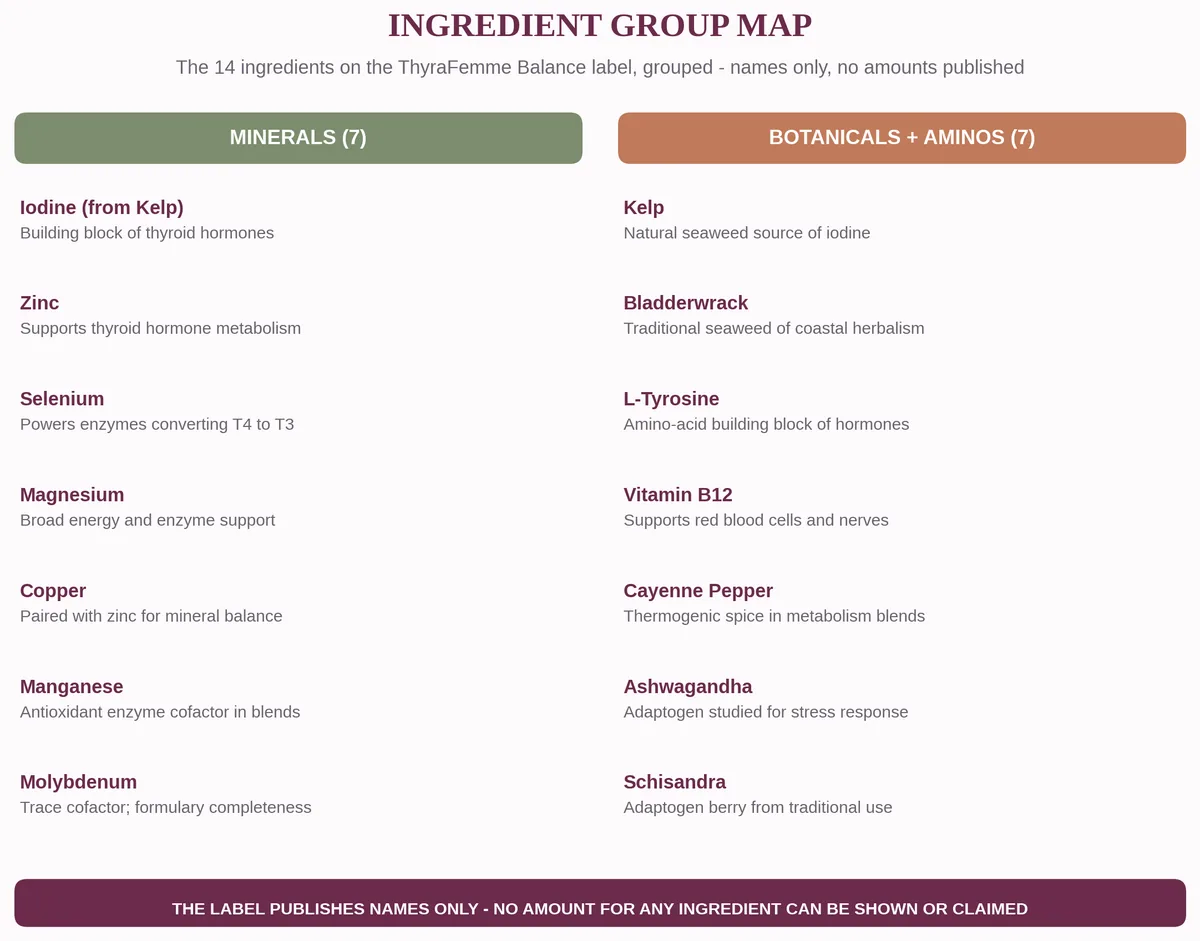
Minerals: The Thyroid's Raw Materials
The first seven ingredients on the label are essential dietary minerals. Two of them — iodine and selenium — have direct, well-characterized roles inside the thyroid gland itself, while the remaining five participate in broader enzymatic, cellular, or trace-mineral pathways. Because the public label discloses ingredient names only without per-ingredient weights, every profile below evaluates the mineral as a nutritional substance rather than making a dose-based claim about any bottle.
Iodine (from Kelp)
What it is: Iodine is an essential trace element concentrated by thyroid follicular cells and incorporated directly into the molecular structure of thyroxine (T4, which carries four iodine atoms) and triiodothyronine (T3, which carries three iodine atoms) (NIH Office of Dietary Supplements; American Thyroid Association).
Why it is in thyroid formulas: Without adequate dietary iodine, the thyroid gland cannot synthesize thyroid hormones, making iodine the most recognizable mineral in thyroid-targeted products.
What the evidence says: Human physiology establishes that correcting true iodine deficiency restores normal hormone synthesis, whereas excess supplemental iodine in already sufficient populations is associated with elevated TSH, thyroid autoimmunity, or acute inhibition of hormone synthesis via the Wolff-Chaikoff effect (ATA; Endocrine Society). For a deeper look at both sides of that U-shaped curve, read our guide on the evidence behind iodine and selenium.
What we don't know at supplement doses: Because no per-ingredient amount is disclosed on the label and kelp-derived iodine varies naturally across harvests, it is impossible to know how much elemental iodine a capsule delivers or whether that quantity sits in a modest nutritional range or an excessive one.
Zinc
What it is: Zinc is an essential trace mineral involved in hundreds of metalloenzymes, cellular transcription factors, and protein synthesis pathways throughout the human body (NIH Office of Dietary Supplements).
Why it is in thyroid formulas: Formulators include zinc because zinc-finger proteins are involved in thyroid hormone receptor binding and in the hypothalamic-pituitary regulation of thyrotropin-releasing hormone (TRH) and TSH.
What the evidence says: Observational studies and small clinical investigations suggest that overt zinc deficiency is associated with impaired T4-to-T3 conversion and hair shedding, and that correcting a documented zinc deficiency helps restore normal mineral status. However, in adults with adequate dietary zinc intake, clinical trials have not established that extra supplemental zinc changes thyroid hormone output.
What we don't know at supplement doses: No amount or chemical salt form (such as zinc picolinate, citrate, or oxide) is disclosed on the public label, so absorption and nutritional relevance cannot be evaluated.
Selenium
What it is: Selenium is an essential trace mineral incorporated as selenocysteine into twenty-five human selenoproteins, including the iodothyronine deiodinase enzymes (DIO1, DIO2, DIO3) and glutathione peroxidases (GPx) highly concentrated in thyroid tissue (NIH Office of Dietary Supplements).
Why it is in thyroid formulas: Deiodinase enzymes remove an iodine atom from T4 to produce biologically active T3, while glutathione peroxidases help shield thyroid cells from hydrogen peroxide generated during hormone synthesis.
What the evidence says: Researchers have examined selenium extensively in autoimmune thyroiditis; several randomized trials report reductions in thyroid peroxidase antibody (TPOAb) levels in selenium-deficient cohorts, though large trials such as the 2024 CATALYST study found that antibody shifts did not translate into superior patient quality-of-life outcomes (Winther et al., 2024). Selenium also has a narrow margin between nutritional adequacy and selenosis (chronic excess).
What we don't know at supplement doses: With no microgram amount or chemical form (selenomethionine vs. sodium selenite) published on the label, neither nutritional adequacy nor cumulative intake safety alongside food can be determined.
Magnesium
What it is: Magnesium is an abundant intracellular mineral that acts as a cofactor in more than 300 enzymatic reactions, particularly those involving adenosine triphosphate (ATP) energy transfer, neuromuscular signaling, and sleep regulation (NIH Office of Dietary Supplements).
Why it is in thyroid formulas: Magnesium is frequently included in women's thyroid and midlife blends because suboptimal magnesium intake is common in adult diets and is associated with muscle cramps, poor sleep quality, and daytime fatigue.
What the evidence says: Cross-sectional studies have examined associations between very low serum magnesium and thyroid markers, and clinical research supports magnesium supplementation for correcting deficiency-related neuromuscular or sleep complaints. Direct interventional evidence showing that magnesium alters thyroid gland hormone synthesis in magnesium-replete adults remains thin.
What we don't know at supplement doses: Magnesium salts (such as magnesium glycinate or citrate) are physically bulky molecules; inside a multi-ingredient capsule with no disclosed weights, the elemental magnesium contribution is unknown and typically small.
Copper
What it is: Copper is an essential trace element required by cytochrome c oxidase (cellular energy production), superoxide dismutase (antioxidant defense), and enzymes involved in iron transport and connective tissue crosslinking (NIH Office of Dietary Supplements).
Why it is in thyroid formulas: Formulators often pair copper with zinc because high supplemental zinc intake over time can compete with intestinal copper absorption, and animal/observational studies note copper's participation in hypothalamic-pituitary signaling.
What the evidence says: Human clinical research on copper supplementation for thyroid endpoints is minimal, mostly limited to observational correlations between serum trace-metal ratios and thyroid hormone concentrations. Its presence in a multi-mineral blend reflects general trace-mineral balance rather than targeted thyroid intervention.
What we don't know at supplement doses: No amount is disclosed on the public label, and thyroid-specific clinical benefit from supplemental copper in non-deficient adults is unestablished.
Manganese
What it is: Manganese is a trace mineral that serves as the catalytic core of manganese superoxide dismutase (MnSOD), the primary antioxidant enzyme inside cellular mitochondria, and participates in carbohydrate and amino-acid metabolism (NIH Office of Dietary Supplements).
Why it is in thyroid formulas: Included as a companion antioxidant cofactor alongside selenium, zinc, and copper to round out trace-mineral coverage.
What the evidence says: While laboratory studies describe MnSOD's role in protecting mitochondria from oxidative byproducts, human clinical trials evaluating manganese supplementation for thyroid function are virtually nonexistent. Dietary manganese deficiency is rare in adults eating whole foods, grains, legumes, and tea.
What we don't know at supplement doses: No amount is disclosed on the public label, and thyroid-specific benefit from supplemental manganese is unestablished.
Molybdenum
What it is: Molybdenum is an essential ultratrace mineral that functions as a cofactor for four human enzymes — sulfite oxidase, xanthine oxidase, aldehyde oxidase, and mitochondrial amidoxime-reducing component (NIH Office of Dietary Supplements).
Why it is in thyroid formulas: Formulators include molybdenum to complete a broad-spectrum trace-mineral complex; dietary deficiency in humans is exceedingly rare because legumes, grains, and leafy vegetables supply ample amounts.
What the evidence says: Speaking plainly, molybdenum has the thinnest thyroid-specific research base of any mineral on the label. Essentially no human clinical trials exist examining molybdenum supplementation for thyroid hormone production or symptom outcomes; its inclusion represents formulary completeness rather than targeted thyroid science.
What we don't know at supplement doses: No amount is disclosed on the public label, and no clinical evidence links supplemental molybdenum to thyroid outcomes.
Botanicals and Aminos: The Supporting Cast
The remaining seven ingredients combine two iodine-bearing marine seaweeds, a structural amino acid, an essential B vitamin, a culinary thermogenic spice, and two traditional adaptogenic herbs. Overall, the human clinical evidence base for this group is thinner and far more weighted toward traditional herbalism or general stress research than the core thyroid minerals. As with the mineral group, the public label discloses ingredient names only, so no dose-based claims can be made.
Kelp
What it is: Kelp refers to large brown marine algae (typically species of Laminaria or Ascophyllum) that naturally bioaccumulate dissolved iodine and trace minerals from seawater.
Why it is in thyroid formulas: Supplement formulators use kelp as a "whole-food" botanical vehicle to deliver dietary iodine while appealing to shoppers who prefer plant-derived ingredients over synthetic potassium iodide.
What the evidence says: Researchers have examined kelp primarily as an iodine delivery source rather than a distinct pharmacological herb. Analytical studies published in Thyroid (Leung et al.) emphasize a major clinical caution: iodine concentrations in commercial kelp products vary dramatically by seaweed species, harvest season, and processing, and heavy-metal accumulation (such as inorganic arsenic) depends heavily on harvest waters.
What we don't know at supplement doses: Because neither the milligram weight of kelp nor a standardized iodine assay is published on the label, the actual elemental iodine delivered per capsule cannot be determined.
Bladderwrack
What it is: Bladderwrack (Fucus vesiculosus) is a brown coastal seaweed found in the North Atlantic and Baltic seas that contains variable quantities of iodine, alginates, and sulfated polysaccharides (fucoidans).
Why it is in thyroid formulas: Like kelp, bladderwrack is included for its traditional herbal reputation as a marine iodine source and to create a multi-seaweed botanical profile.
What the evidence says: The modern human research base for bladderwrack in thyroid health is very thin, consisting primarily of historical ethnobotanical records and chemical composition analyses. Researchers have not established any thyroid-specific clinical benefits for bladderwrack beyond whatever iodine it happens to supply, and it shares the exact same batch-to-batch iodine variability concerns as kelp.
What we don't know at supplement doses: No weight or iodine standardization data are disclosed on the public label, making its contribution to total daily iodine intake unknowable.
L-Tyrosine
What it is: L-tyrosine is a non-essential (conditionally essential) amino acid synthesized in the body from phenylalanine and found abundantly in dietary proteins such as poultry, fish, dairy, eggs, nuts, and seeds.
Why it is in thyroid formulas: L-tyrosine is the most mechanistically direct organic molecule on the label: inside the thyroid gland, tyrosine residues on the protein thyroglobulin form the physical carbon-ring scaffold onto which iodine atoms are bound to create T4 and T3.
What the evidence says: While tyrosine's biochemical role as a hormone precursor is textbook physiology, human supplementation trials have examined L-tyrosine primarily for acute cognitive performance under extreme environmental stress (such as cold exposure or sleep deprivation). In adults eating adequate dietary protein, researchers have not established that taking extra free-form L-tyrosine changes baseline thyroid hormone levels.
What we don't know at supplement doses: Amino acids used in human research are typically studied in substantial gram-level quantities that cannot fit alongside thirteen other ingredients inside a standard capsule, and no milligram amount is disclosed on the label.
Vitamin B12
What it is: Vitamin B12 (cobalamin) is an essential water-soluble vitamin required for red blood cell maturation, neurological myelination, and cellular DNA synthesis (NIH Office of Dietary Supplements).
Why it is in thyroid formulas: Vitamin B12 does not build thyroid hormones directly; formulators include it because B12 deficiency causes fatigue, weakness, memory fog, and numbness that closely mimic hypothyroid symptoms.
What the evidence says: Clinical literature documents that vitamin B12 deficiency co-occurs at elevated rates in people with autoimmune thyroid disease (particularly Hashimoto's thyroiditis, sometimes alongside autoimmune gastritis). Correcting a laboratory-confirmed B12 deficiency relieves deficiency-induced fatigue, which is an important clinical distinction from altering thyroid gland function itself.
What we don't know at supplement doses: Neither the microgram quantity nor the chemical form of B12 (methylcobalamin vs. cyanocobalamin) is stated on the public label.
Cayenne Pepper
What it is: Cayenne pepper is the dried ground fruit of Capsicum annuum, containing pungent vanilloid compounds known collectively as capsaicinoids (principally capsaicin).
Why it is in thyroid formulas: Formulators add cayenne pepper for its "thermogenic" and metabolic-warming positioning, aiming to appeal to shoppers concerned about sluggish metabolism or cold hands and feet.
What the evidence says: Researchers have examined capsaicin in metabolic studies for modest, short-term effects on diet-induced thermogenesis and lipid oxidation. That research is real but small in magnitude and is not thyroid-specific — capsaicin does not participate in thyroid hormone synthesis or pituitary-thyroid signaling. In a thyroid formula, cayenne pepper serves as metabolic garnish rather than a core thyroid nutrient.
What we don't know at supplement doses: No milligram weight or Scoville/capsaicinoid standardization is disclosed on the label, so whether the amount is perceptible or trace is unknown.
Ashwagandha
What it is: Ashwagandha (Withania somnifera) is a revered root in Ayurvedic practice classified as an adaptogen — an herb studied for modulating the hypothalamic-pituitary-adrenal (HPA) stress response.
Why it is in thyroid formulas: It is the most widely studied botanical on this label for perceived stress and serum cortisol, and formulators highlight small human studies examining its effects on thyroid hormone markers.
What the evidence says: Researchers have examined standardized ashwagandha root extracts in several randomized controlled trials for stress and sleep, and a small number of short-duration trials (such as an 8-week study by Sharma et al., 2018, in 50 adults with subclinical hypothyroidism) suggest that standardized root extract was associated with modest increases in T3 and T4 and lower TSH compared with placebo. This evidence must be read with strict clinical caution: sample sizes were small, study durations were short, and findings do not establish ashwagandha as a treatment for thyroid disease. YMYL Medication Warning: Because ashwagandha may influence thyroid hormone levels, anyone taking levothyroxine or other thyroid medication, or anyone with hyperthyroidism or autoimmune thyroid disease, must consult their clinician before using it.
What we don't know at supplement doses: Clinical trials use specific standardized root extracts (such as KSM-66 or Sensoril) at known milligram weights; the public label discloses neither the plant part, extract standardization, nor milligram amount.
Schisandra
What it is: Schisandra (Schisandra chinensis), often called five-flavor berry, is a woody vine fruit used in traditional Chinese herbalism as a stamina and stress-resilience tonic.
Why it is in thyroid formulas: Paired alongside ashwagandha to round out an "adaptogen stack" aimed at general fatigue and midlife stress resilience.
What the evidence says: As with molybdenum among the minerals, candor requires stating plainly that schisandra has a minimal thyroid-specific research base. While preclinical and traditional-use literature discusses schisandra lignans in the context of physical endurance and liver enzyme pathways, researchers have not established human thyroid outcomes for schisandra in clinical trials.
What we don't know at supplement doses: No milligram amount or lignan standardization is disclosed on the public label.
14 Thyroid-Support Ingredients: Physiological Role, RDA/UL & Evidence Summary
Before buying any over-the-counter thyroid formula (such as ThyraFemme Balance), compare how each of the 14 standard ingredients functions and where clinical safety ceilings sit.
| Ingredient | Category | Primary Thyroid / Metabolic Role | Adult RDA / Upper Limit (UL) |
|---|---|---|---|
| Iodine (Kelp / Bladderwrack) | Trace Mineral | Structural backbone of T4 (4 iodine atoms) and T3 (3 iodine atoms) | 150 mcg RDA / 1,100 mcg UL |
| Selenium | Trace Mineral | Cofactor for iodothyronine deiodinase (T4→T3 conversion) & glutathione peroxidase | 55 mcg RDA / 400 mcg UL |
| Zinc & Copper | Trace Minerals | Support TRH/TSH synthesis and T3 nuclear receptor binding; copper balances high zinc | Zinc: 8 mg RDA (40 mg UL) / Copper: 900 mcg RDA |
| Manganese & Molybdenum | Trace Minerals | Cofactors for manganese superoxide dismutase (MnSOD) and sulfite/xanthine oxidases | Mn: 1.8 mg AI / Mo: 45 mcg RDA |
| L-Tyrosine | Amino Acid | Protein-derived amino acid scaffold iodinated inside thyroglobulin + catecholamine precursor | No established RDA (obtained via dietary protein) |
| Vitamin B12 & Magnesium | Vitamin / Mineral | Correct common overlapping midlife deficiencies linked to fatigue and poor sleep | B12: 2.4 mcg RDA / Supplemental Mg: 350 mg UL |
| Ashwagandha, Schisandra & Cayenne | Adaptogens / Botanicals | Studied for HPA-axis cortisol modulation and perceived energy; ashwagandha can alter thyroid labs | No RDA; monitor thyroid labs if using ashwagandha |
Why Ingredients Are Not the Same as Product Efficacy
Reading fourteen recognizable ingredient names on a supplement bottle often creates a persuasive halo effect: if iodine and selenium are essential for the thyroid, and ashwagandha has been examined in clinical trials, shouldn't a capsule combining all fourteen work? In nutritional science, an impressive ingredient list does not equal product efficacy for four concrete reasons:
- Dose is everything, and dose is undisclosed: Every ingredient above was evaluated as a chemical or botanical substance in general research — not as ThyraFemme Balance's dose of it — because the public label publishes ingredient names only. Research conducted at a specific clinical quantity tells you nothing about a capsule that may contain only a tiny fraction of that amount.
- Form and bioavailability matter: Mineral salt forms (for example, organic selenomethionine versus inorganic selenite, or chelated magnesium versus magnesium oxide), botanical extract standardization (standardized ashwagandha root extract versus raw unstandardized powder), and wild seaweed iodine variability all change what a capsule actually delivers to your bloodstream. None of these specifications appear on a name-only label.
- Interactions within a 14-ingredient formula are unstudied: Each nutrient or botanical summarized on this page was studied in isolation or in two-nutrient pairs. When fourteen minerals, seaweeds, amino acids, and herbs are compressed into a single capsule, the combined finished formula has zero published randomized clinical trials verifying how the ingredients interact or perform together.
- Label transparency is the other half of the audit: Understanding what ingredients do is only half the story. The other half is label transparency — disclosed weights, third-party purity testing, company reachability, and return policy mechanics — which is exactly what the thyroid supplement label checklist teaches you to verify. For how all of this applies to ThyraFemme Balance specifically, see our full ThyraFemme Balance review.
Take This to Your Appointment: The Expanded Lab & Label Checklist
- Clarify the goal: separate symptom tracking and laboratory testing from over-the-counter supplement marketing. Recognizing an ingredient name like L-tyrosine, ashwagandha, bladderwrack, or selenium on a bottle is not the same as knowing whether your thyroid needs it. Discuss your symptoms and blood work with a qualified clinician first so you understand which nutritional pathways—if any—are relevant to your health.
- Check full disclosure: look for transparent per-ingredient listing and independent third-party testing seals. Multi-ingredient thyroid blends often combine trace minerals, seaweeds, and adaptogenic herbs in a single capsule without publishing individual amounts on the sales page. Looking for full per-ingredient transparency and third-party purity seals helps you avoid under-dosed blends or unstandardized seaweed extracts.
- Review timing rules: ask your clinician or pharmacist how supplements, biotin, or minerals interact with lab draws or prescriptions. Botanical adaptogens such as ashwagandha and iodine-bearing seaweeds like kelp and bladderwrack can interact with thyroid hormone levels, sedatives, or autoimmune thyroid conditions. Always ask your physician or pharmacist how specific ingredients fit with your scheduled blood draws and current prescriptions.
- Bring your full list: share every capsule, powder, and medication at your appointment. When a formula combines fourteen or more minerals and herbs in one product, the chance of overlapping with your existing supplements rises sharply. Sharing the complete ingredient panel with your healthcare provider ensures every herb, amino acid, and mineral is evaluated in the context of your full medical history.
Frequently Asked Questions
What are the most important ingredients in a thyroid supplement?
Iodine, selenium, and L-tyrosine have the most direct roles in thyroid hormone production, which is why they appear in most formulas. But the ingredient list alone is not enough — without per-ingredient amounts, you cannot judge whether any dose is meaningful.
Does ashwagandha help thyroid function?
A small number of trials suggest ashwagandha may modestly affect thyroid hormone levels in some adults, but the studies are small and short. It is not a treatment for thyroid disease, and anyone on thyroid medication should consult their clinician before using it.
Is kelp safe for thyroid supplements?
Kelp is a natural iodine source, but its iodine content varies widely without standardization testing. Too much iodine can disrupt thyroid function, so kelp-containing formulas without disclosed iodine amounts deserve extra scrutiny.
What does selenium do for the thyroid?
Selenium is required by enzymes that convert T4 into active T3 and by antioxidant systems protecting thyroid tissue. Researchers have studied it most in autoimmune thyroid settings, with mixed results. It has a narrow range between helpful and excessive intake.
Can I take thyroid-support ingredients with levothyroxine?
Do not add iodine, selenium, or any thyroid-targeted formula to a levothyroxine regimen without your clinician's guidance. Supplements can interfere with medication absorption and with thyroid function itself. This page is educational, not medical advice.
Do the ingredients in ThyraFemme Balance have evidence behind them?
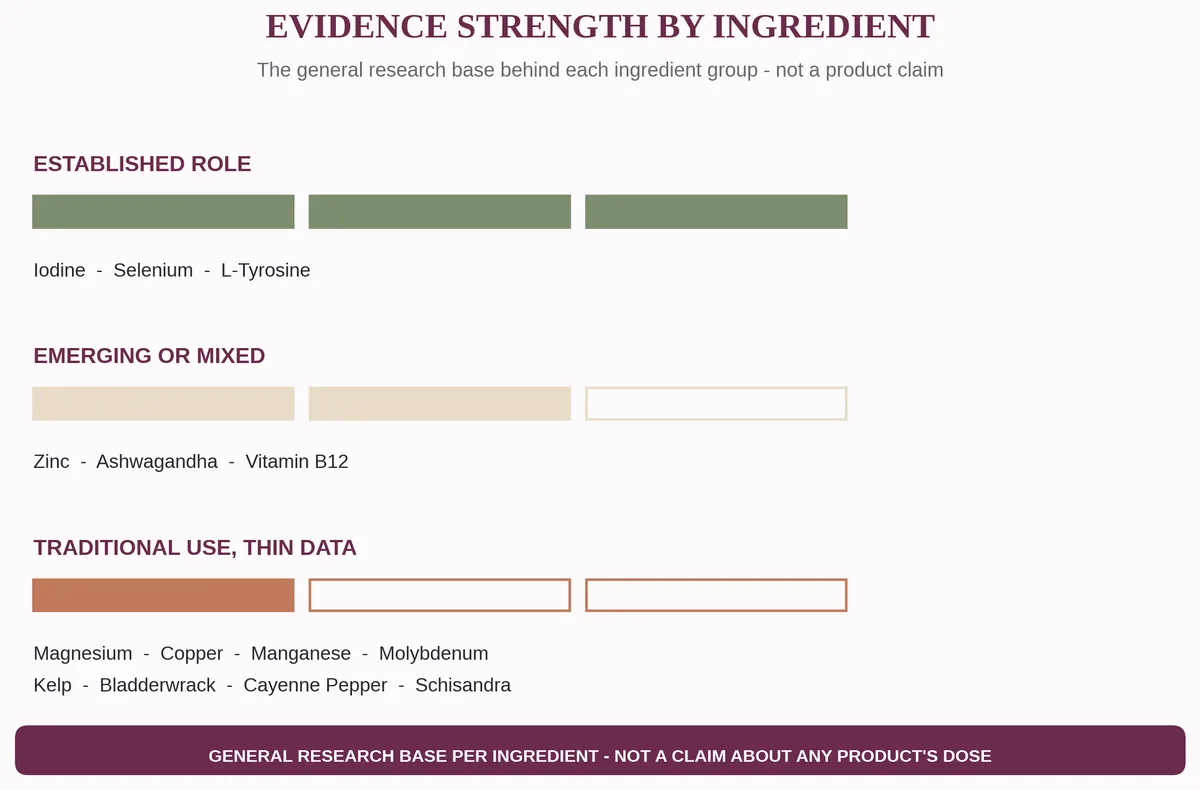
The 14 named ingredients range from well-established (iodine, selenium) to thinly studied (schisandra, molybdenum). But the label discloses names only — no amounts — so ingredient-level evidence cannot be translated into product-level claims. See the ThyraFemme Balance label audit for the label analysis.
Are 14 ingredients better than 5 in a thyroid formula?
Not necessarily. More ingredients often mean smaller doses of each, and combinations are rarely studied as a whole. A shorter list with fully disclosed amounts is more evaluable than a long list with none.
Medical Disclaimer: This article is for informational purposes only and is not medical advice. Dietary supplement ingredients are not medications and are not substitutes for prescribed thyroid drugs such as levothyroxine, Synthroid, liothyronine, or desiccated thyroid. Always consult your physician or pharmacist before starting any supplement, especially if you have a thyroid condition or take prescription medication.