Thyroid dysfunction and perimenopause cause nearly identical midlife symptoms—fatigue, brain fog, irregular periods, hair thinning, sleep disruption, and temperature swings—and peak in the same 40-to-55 age window. Because symptoms alone cannot separate them, a targeted blood panel (TSH and free T4 alongside cycle history) is essential before starting any supplement.
- 01 Why Thyroid and Perimenopause Symptoms Overlap
- 02 Symptom by Symptom: How They Compare
- 03 Signs That Point Toward the Thyroid
- 04 Signs That Point Toward Perimenopause
- 05 The Blood Tests That Settle It
- 06 When to See a Doctor
- 07 Supplements Marketed for This Overlap
- 08 Take This to Your Appointment: The Expanded Lab & Label Checklist
- 09 Frequently Asked Questions
- 9.1 Can perimenopause cause thyroid problems?
- 9.2 Is it thyroid or menopause causing my fatigue?
- 9.3 What blood test distinguishes thyroid issues from perimenopause?
- 9.4 Can you have both a thyroid problem and perimenopause at the same time?
- 9.5 Does hair loss mean thyroid or perimenopause?
- 9.6 At what age should women get their thyroid checked?
- 9.7 Can thyroid medication be affected by menopause?
- 9.8 Should I try a thyroid supplement before seeing a doctor?
Editorial & Medical Notice: This informational guide is Independently Audited against clinical literature from the American Thyroid Association (ATA), The Menopause Society (NAMS), the Endocrine Society, and the American College of Obstetricians and Gynecologists (ACOG). It is for educational purposes only and is not medical advice.
Why Thyroid and Perimenopause Symptoms Overlap
For women between ages 40 and 55, persistent fatigue, unexpected weight shifts, mood changes, sleep disruption, and temperature sensitivity frequently trigger a frustrating clinical question: is it thyroid or menopause transition? According to educational guidance from the American Thyroid Association (ATA) and The Menopause Society (formerly the North American Menopause Society, NAMS), the confusion happens because thyroid hormones and ovarian hormones act on many of the exact same target tissues—including the hypothalamus, cerebral cortex, cardiovascular system, hair follicles, and skeletal muscle.
The thyroid gland secretes thyroxine (T4) and triiodothyronine (T3), which set basal metabolic rate, thermogenesis, gastrointestinal motility, and central nervous system alertness (Endocrine Society). During perimenopause—the multi-year transition preceding the final menstrual period—fluctuating and eventually declining estradiol and progesterone levels alter hypothalamic thermoregulatory neurons, serotonin and gamma-aminobutyric acid (GABA) signaling, and sleep continuity (The Menopause Society). When either hormonal axis shifts, the downstream experience felt by the body can look remarkably similar from the outside.
Epidemiological data from the Endocrine Society and ATA explain why the overlap peaks in the mid-40s to early 50s: the typical onset window for perimenopause (ages 45 to 55, and sometimes earlier in the early 40s) coincides directly with the age bracket in which autoimmune thyroid conditions—most notably Hashimoto's thyroiditis—rise in prevalence among women. Chronic midlife caregiving stress, career demands, and fragmented sleep further compound both pictures. That is why the rest of this article compares symptom by symptom instead of asking you to guess.
Symptom by Symptom: How They Compare
While no symptom list can replace a laboratory draw, clinical histories recorded by endocrinologists and gynecologists look for directional clusters. The diagram and four-column comparison table below map eight common midlife complaints across thyroid-typical patterns, perimenopause-typical patterns, and shared territory.
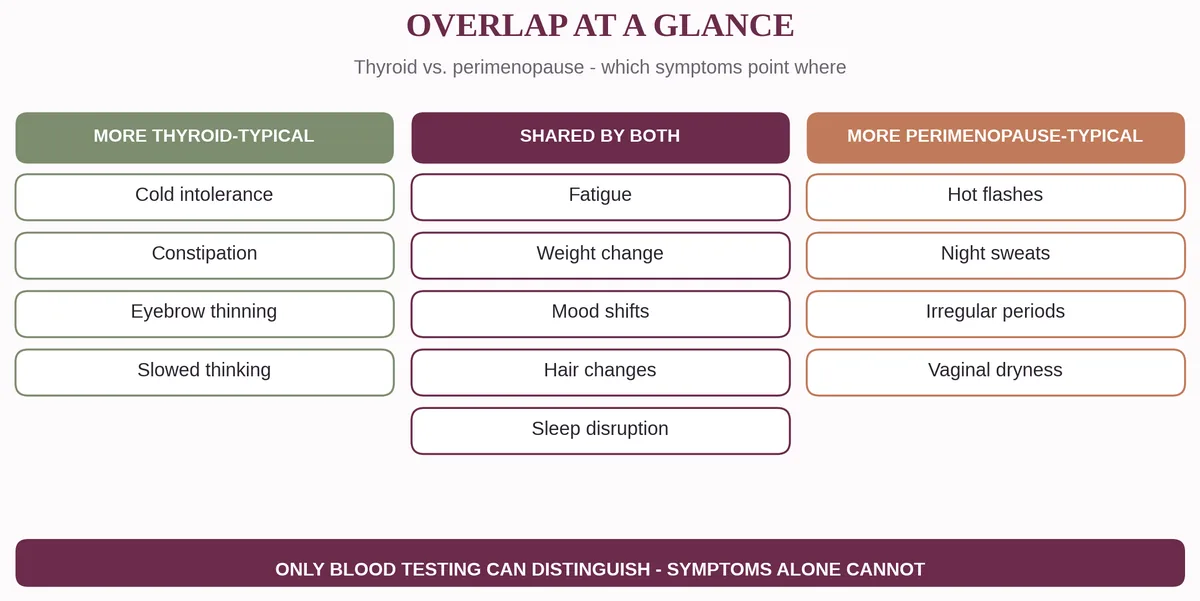
| Symptom | More typical of thyroid | More typical of perimenopause | Overlaps heavily |
|---|---|---|---|
| Fatigue & low stamina | Constant, heavy daytime exhaustion present even after a full night of uninterrupted sleep (ATA). | Daytime tiredness closely linked to nocturnal awakenings or night sweats (The Menopause Society). | ✓ |
| Weight & body composition change | Gradual scale weight gain paired with fluid retention and slowed bowel motility (Endocrine Society). | Central abdominal fat redistribution even when total scale weight changes modestly (NAMS). | ✓ |
| Mood, anxiety & low mood | Flat apathy, slowed mental processing, or generalised restlessness with overactive patterns (ATA). | Cyclical irritability, sudden tearfulness, or heightened anxiety tracking with cycle shifts (ACOG). | ✓ |
| Hair & skin changes | Coarse, dry skin and diffuse scalp shedding sometimes accompanied by outer-third eyebrow thinning (ATA). | Gradual crown or part-line hair diameter thinning and drier mucosal tissues (NAMS). | ✓ |
| Temperature sensitivity | Persistent cold intolerance (feeling chilled when others are comfortable) or constant heat intolerance (ATA). | Sudden, episodic hot flashes and drenching night sweats lasting several minutes (ACOG). | ✓ |
| Sleep disruption | Sleeping long hours without feeling restored, or difficulty falling asleep with a racing pulse (Endocrine Society). | Middle-of-the-night awakenings—often around 2:00 to 4:00 AM—triggered by vasomotor surges (NAMS). | ✓ |
| Menstrual cycle changes | Consistently heavier, prolonged, or more frequent menstrual flow across multiple cycles (ACOG). | Cycle length varying by seven or more days, skipped periods, and progressively longer gaps (NAMS). | ✓ |
| Heart rate & palpitations | Sustained resting heart-rate changes—slower in underactive patterns, persistently rapid in overactive patterns (ATA). | Brief, fluttering awareness of heartbeats often coinciding with a hot flash or evening rest (NAMS). | ✓ |
Hypothyroidism fatigue vs. menopause fatigue: Fatigue is the single highest-confusion row on the table because both conditions drain daily resilience. Clinical descriptions from the American Thyroid Association note that thyroid-related fatigue tends to feel like a uniform, physical heaviness that extra rest rarely relieves, whereas perimenopause fatigue frequently tracks with fragmented slow-wave sleep and nocturnal vasomotor awakenings (The Menopause Society).
Weight change and mood patterns: Similarly, both hormonal transitions are associated with frustrating shifts in body composition and emotional steadiness. In perimenopause, declining estrogen favors visceral abdominal fat storage and heightened sensitivity to stress hormones (NAMS), while underactive thyroid function slows whole-body resting energy expenditure and gastrointestinal transit (Endocrine Society). Because both patterns can occur simultaneously in the same woman, patterns suggest questions for your appointment while blood work decides.
Signs That Point Toward the Thyroid
When clinicians evaluate hypothyroidism vs perimenopause in women over 40, certain symptom combinations make a thyroid panel the immediate priority at a primary-care visit. None of the patterns below confirms a condition on its own; rather, each is a well-documented reason to ask your clinician about thyroid blood screening:
- Persistent cold intolerance: Feeling chronically cold in hands, feet, and core in environments where others feel comfortable is classically reported with underactive thyroid function (American Thyroid Association).
- Unexplained weight gain paired with sluggish digestion: Scale increases accompanied by new or worsening constipation and facial or ankle puffiness point toward evaluating metabolic rate and thyroid hormone output (Endocrine Society).
- Dry skin and hair changes with outer-eyebrow thinning: Rough, dry skin on the elbows and shins alongside diffuse scalp shedding and thinning of the outer third of the eyebrows (known in dermatology literature as Hertoghe's sign or Queen Anne's sign) is associated with low thyroid hormone signaling.
- Slowed cognition that does not fluctuate with your cycle: Steady mental fog, slower word retrieval, or hoarseness of voice that remains constant week after week rather than rising and falling premenstrually (ATA).
- Personal or family history of autoimmune conditions: Having a first-degree relative with Hashimoto's thyroiditis, Graves' disease, type 1 diabetes, celiac disease, or rheumatoid arthritis increases baseline likelihood of autoimmune thyroid involvement (Endocrine Society).
- Prior history of thyroid antibodies, goiter, or neck nodules: Any previously noted thyroid enlargement or borderline lab finding warrants periodic follow-up with a physician.
- Symptoms that persist despite a stable menstrual pattern: Experiencing classic low-energy and cold-sensitivity symptoms in your late 30s or early 40s while menstrual cycles remain completely regular to the day.
If several of these sound familiar, the next section on blood tests tells you exactly what to ask for at your appointment — bring this article's list.
Signs That Point Toward Perimenopause
Conversely, gynecological guidelines from the American College of Obstetricians and Gynecologists (ACOG) and The Menopause Society highlight a distinct perimenopause symptoms checklist—patterns that make the menopausal transition a central topic to discuss with your healthcare provider:
- Hot flashes and night sweats (vasomotor symptoms): Sudden waves of upper-body heat, flushing, and perspiration lasting one to five minutes, often followed by a chill, are reported by up to 75% to 80% of women during the menopausal transition (The Menopause Society).
- Irregular or skipping menstrual periods: According to the STRAW+10 (Stages of Reproductive Aging Workshop) criteria endorsed by NAMS and the Endocrine Society, a persistent difference of seven or more days in the length of consecutive menstrual cycles—followed later by intervals of 60 days or more without a period—is the hallmark clinical marker of perimenopause.
- Genitourinary and vaginal dryness: Declining local estrogen signaling in urogenital tissues is commonly associated with vaginal dryness, irritation, or new urinary urgency (ACOG).
- Sleep disruption tied directly to night sweats: Waking abruptly drenched in sweat or kicking off covers, even when you fall asleep easily at bedtime (The Menopause Society).
- Mood shifts tracking with cycle irregularity: Heightened premenstrual-like tension, rage, or weepiness that clusters around erratic ovulatory cycles.
- Typical mid-40s to early-50s onset alongside cycle changes: Symptoms emerging gradually in parallel with shorter, longer, or skipped menstrual cycles.
According to The Menopause Society (NAMS), the combination of menstrual cycle irregularity plus vasomotor symptoms (hot flashes and night sweats) is the clinical pattern most specific to perimenopause. But perimenopause does not rule out thyroid disease — the two commonly coexist, and only testing can distinguish them, which is why testing matters even when perimenopause seems obvious.
The Blood Tests That Settle It
Requesting a targeted thyroid blood test for women is the fastest way to replace guesswork with objective data. While perimenopause is diagnosed primarily by clinical history and menstrual pattern rather than a single hormone draw (because estradiol and follicle-stimulating hormone fluctuate wildly from day to day during perimenopause, per ACOG), thyroid function is evaluated directly through a standardized venous blood panel:
- TSH (Thyroid-Stimulating Hormone): Produced by the pituitary gland, TSH is the universal first-line screening marker recommended by the American Thyroid Association and the Endocrine Society to assess how the pituitary-thyroid axis is communicating.
- Free T4 (Unbound Thyroxine): Measures the biologically available fraction of the primary hormone secreted by the thyroid gland; clinicians routinely pair free T4 with TSH to see the complete picture.
- Thyroid Antibodies (TPOAb / TgAb) and Free T3 (as clinician-directed): When autoimmune thyroiditis or overactive patterns are suspected, a clinician may add thyroid peroxidase antibodies (TPOAb), thyroglobulin antibodies (TgAb), or free triiodothyronine (free T3).
In clinical medicine, a "normal range" simply refers to the statistical distribution of values observed in a reference population—and reference ranges vary by laboratory, assay method, age, time of day, and pregnancy status, so only your ordering clinician can interpret your numbers in context. At your appointment, you can simply say: "Because my symptoms overlap with both perimenopause and thyroid changes, could we check a baseline TSH and free T4 panel?" For a full walkthrough of each marker and how to prepare for the blood draw, see our guide: Thyroid Blood Tests Explained.
When to See a Doctor
Knowing when to get thyroid checked helps you book a timely primary-care or gynecology visit rather than waiting months for symptoms to pass on their own. Schedule a formal clinical evaluation if any of the following apply:
- Symptoms persisting more than a few weeks: Ongoing fatigue, brain fog, or temperature changes that do not resolve after two to four weeks of consistent sleep and nutrition.
- Rapid or unexplained weight change: Significant upward or downward shifts in body weight occurring without deliberate changes in diet or physical activity.
- Heart palpitations or a racing resting pulse: Any new awareness of a rapid, pounding, or irregular heartbeat at rest warrants prompt medical assessment (ATA).
- Severe fatigue affecting daily function: Exhaustion that interferes with work concentration, safe driving, exercise tolerance, or family responsibilities.
- New or worsening low mood or anxiety: Persistent apathy, depressive symptoms, or panic episodes that feel out of proportion to daily life stressors (NIMH / ACOG).
- Any visible neck swelling, lump, or difficulty swallowing: Fullness at the base of the front of the neck or a sensation of pressure when swallowing should always be examined physically by a clinician (ATA).
- Planning pregnancy, currently pregnant, or postpartum: Thyroid hormone requirements shift substantially during gestation and the postpartum year, requiring dedicated clinical monitoring (Endocrine Society).
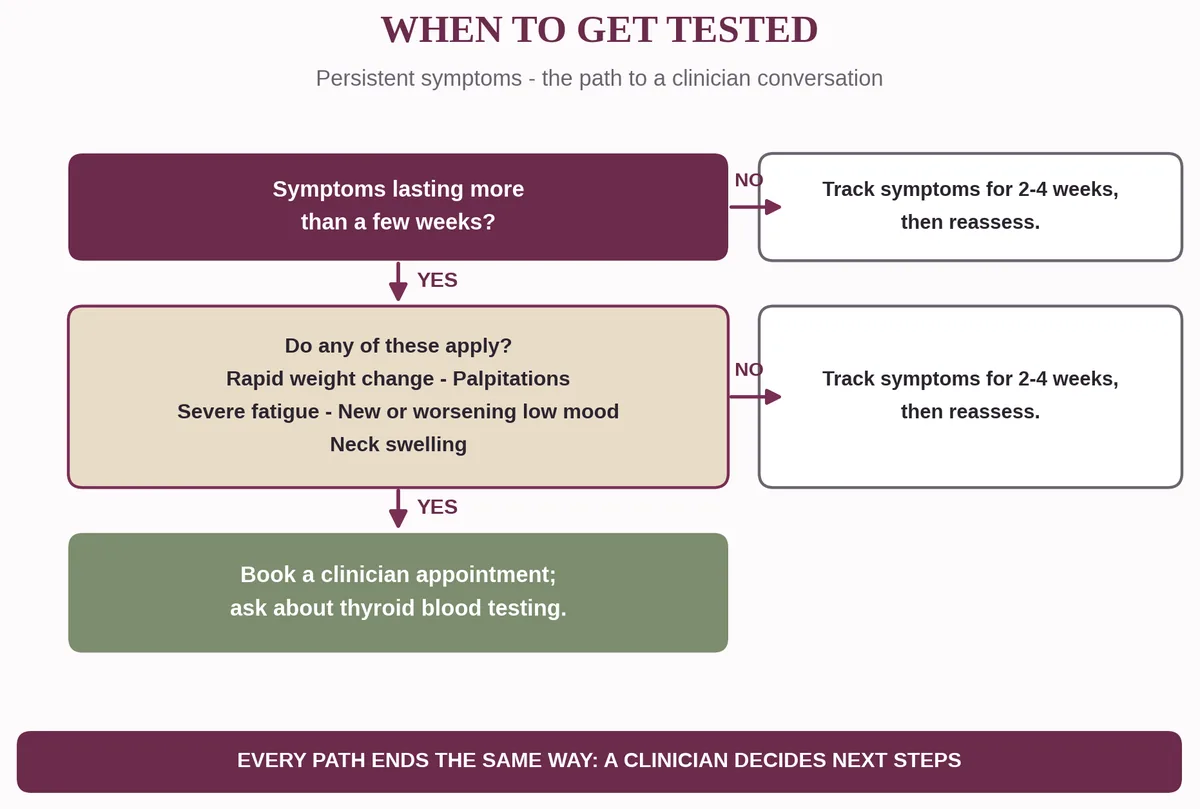
If you are unsure, an appointment is the right call — that is what the visit is for.
Supplements Marketed for This Overlap
Because so many women in their 40s and 50s search online for answers to fatigue, sluggish metabolism, and mood changes, a large retail category of non-prescription "thyroid support" and "hormone harmony" dietary supplements targets this exact demographic. Most formulas in this space combine kelp-derived iodine, selenium, zinc, L-tyrosine, and adaptogenic herbs such as ashwagandha or schisandra, wrapped in wellness marketing language that echoes both thyroid and perimenopause concerns.
Approaching these products with label literacy is essential: marketing copy is not clinical evidence, and many direct-response formulas list ingredients by name only without disclosing per-ingredient milligram or microgram amounts. Before assuming extra minerals help, read what the evidence actually says about iodine and selenium. We independently audit one such product's label here: ThyraFemme Balance review. This article is not medical advice; always consult your clinician before considering any supplement.
Key Takeaways: Thyroid vs. Perimenopause
- Shared hormone targets create identical-looking symptoms: Fatigue, weight redistribution, mood shifts, hair shedding, and sleep disruption appear in both thyroid dysfunction and perimenopause (ATA; The Menopause Society).
- Vasomotor surges + cycle shifts lean perimenopause: Skipping periods paired with episodic hot flashes and night sweats is the pattern most specific to the menopausal transition (ACOG; NAMS).
- Cold intolerance + constipation + outer-brow thinning point toward thyroid screening: Steady physical slowing regardless of menstrual phase warrants a baseline thyroid panel (ATA; Endocrine Society).
- Both conditions frequently coexist after 40: Having perimenopause never rules out an underlying thyroid disorder, which is why blood work is routine in midlife evaluations.
- Blood panels settle what checklists cannot: A clinician-ordered TSH and free T4 draw—interpreted alongside your clinical history—is the only reliable way to separate the two.
Related Thyroid Supplement Audits: Read our Is ThyraFemme a Scam? 2026 Trust & Label Audit for a full breakdown of the name-only label disclosure, 60-day guarantee, and unauthorized marketplace listings, or see ThyraFemme Balance vs Thyroid Support Complex alongside our ThyraFemme Balance Review.
Take This to Your Appointment: The Expanded Lab & Label Checklist
- Clarify the goal: separate symptom tracking and laboratory testing from over-the-counter supplement marketing. Overlapping midlife complaints—such as persistent fatigue, cold intolerance, cycle changes, and brain fog—cannot be sorted out by a supplement sales page. Logging your symptoms alongside your menstrual pattern for two to four weeks gives your clinician the objective timeline needed to order targeted thyroid and reproductive hormone panels.
- Check full disclosure: look for transparent per-ingredient listing and independent third-party testing seals. If you and your doctor decide to evaluate a nutritional supplement after lab results are back, inspect the Supplement Facts panel to confirm every active ingredient is clearly listed rather than hidden inside an unquantified blend. Independent quality seals from organizations such as USP, NSF, or ConsumerLab provide added verification that the bottle matches its label claims.
- Review timing rules: ask your clinician or pharmacist how supplements, biotin, or minerals interact with lab draws or prescriptions. High-dose biotin found in many hair, skin, and wellness formulas can distort immunoassay blood tests for thyroid function and reproductive hormones, producing falsely abnormal readings. Similarly, mineral supplements containing iron, calcium, or kelp must be spaced away from prescription thyroid medication and paused before blood draws as directed by your provider.
- Bring your full list: share every capsule, powder, and medication at your appointment. Many women take separate multivitamins, sleep aids, or botanical blends without realizing their ingredients overlap—especially iodine, selenium, and adaptogenic herbs. Bringing the actual bottles or clear photos of every Supplement Facts panel allows your clinician to check for duplicate ingredients and drug-supplement interactions in one visit.
Frequently Asked Questions
The questions below address the most common points of confusion women bring to primary-care and menopause appointments. Every answer is for informational purposes only and is not medical advice—always consult a qualified healthcare clinician to evaluate your symptoms and lab work, and never start, stop, or adjust thyroid medication (such as levothyroxine, Synthroid, liothyronine, or Armour Thyroid) without your prescriber's supervision.
Can perimenopause cause thyroid problems?
Perimenopause itself does not cause thyroid disease, according to The Menopause Society and the American Thyroid Association, but the two commonly coexist in women over 40 and their symptoms overlap heavily. Hormonal shifts can also mask an existing thyroid condition. If symptoms persist, ask your clinician about thyroid blood testing rather than assuming one explanation.
Is it thyroid or menopause causing my fatigue?
Fatigue alone cannot tell you — it is one of the most overlapping symptoms of both. Patterns help your clinician sort it: fatigue with cold intolerance and constipation leans thyroid (ATA); fatigue with night sweats and irregular periods leans perimenopause (NAMS). Only blood testing plus clinical evaluation can distinguish them.
What blood test distinguishes thyroid issues from perimenopause?
TSH (thyroid-stimulating hormone) is the standard first-line screening test for thyroid function; clinicians often add free T4 and sometimes thyroid antibodies (Endocrine Society). Perimenopause has no single definitive blood test — it is mainly a clinical diagnosis based on age and menstrual pattern. Ask your clinician which panel fits your situation.
Can you have both a thyroid problem and perimenopause at the same time?
Yes. The two are not mutually exclusive, and having perimenopause does not rule out thyroid disease (ACOG). This is why clinicians often check thyroid function even when perimenopause seems like the obvious explanation — addressing one while missing the other leaves symptoms unresolved.
Does hair loss mean thyroid or perimenopause?
Both can involve hair changes, so hair loss alone is not diagnostic. Thinning concentrated at the outer third of the eyebrows is more classically associated with underactive thyroid function (ATA), while diffuse crown shedding can occur in both. A clinician considers the full pattern plus blood work — not any single symptom.
At what age should women get their thyroid checked?
There is no single universal screening age; medical guidelines differ. Many clinicians check thyroid function when symptoms appear or when risk factors exist (family history, prior thyroid disease, or pregnancy planning, per the ATA). If you are over 40 with persistent fatigue, weight change, or mood shifts, asking about testing is reasonable.
Can thyroid medication be affected by menopause?
Thyroid medication needs can change over time for many reasons, and hormonal transitions are one factor clinicians monitor (Endocrine Society). Never adjust, stop, or start thyroid medication on your own — dose changes are a clinician's decision based on blood work. Bring any new symptoms to your prescriber promptly.
Should I try a thyroid supplement before seeing a doctor?
No — supplements are not a substitute for testing or diagnosis. Some thyroid-support products contain kelp iodine and botanicals that can interfere with thyroid function or lab interpretation (see the complete ThyraFemme Balance review). Get evaluated by your clinician first; discuss any supplement afterward.
Medical Disclaimer: This article is for informational purposes only and is not medical advice. Thyroid conditions and perimenopause require professional clinical evaluation. If you take thyroid medication (such as levothyroxine, Synthroid, liothyronine, or desiccated thyroid), have a diagnosed thyroid condition, or are pregnant or nursing, consult your clinician before considering any supplement and never adjust your medication without your clinician's guidance.